
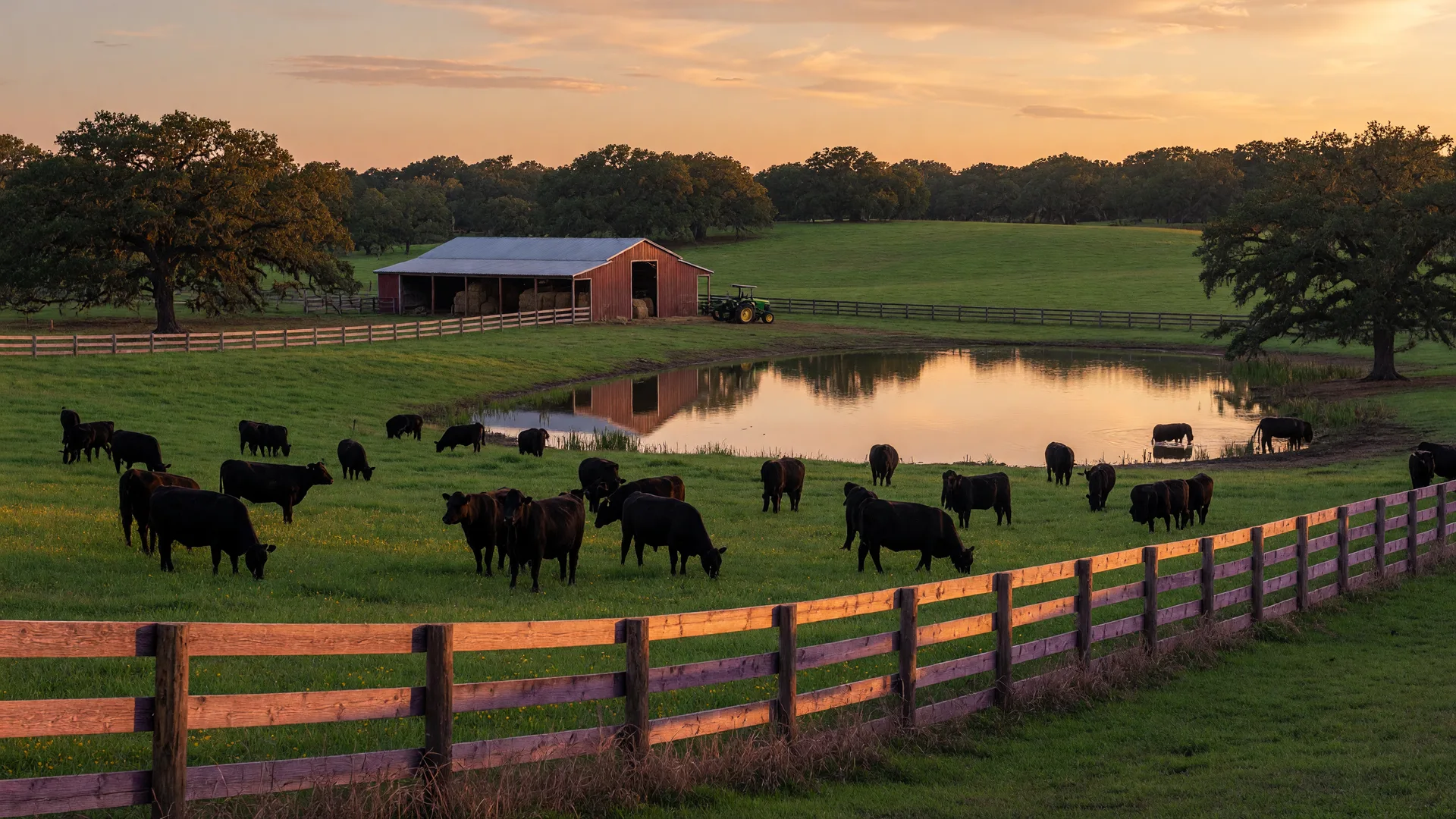
One of the first questions serious land buyers ask us is whether a property has ag-exempt status. The answer can make a significant difference in annual property taxes, sometimes saving thousands of dollars each year. But ag-exempt is not automatic. It depends on how the land is used, what county it is in, and whether the current owner has already established the exemption or the new owner needs to apply.
As founding members of the eXp Land and Ranch division, Shannon and Scott Miles have helped dozens of buyers navigate the ag-exempt process across Lamar, Fannin, Hunt, Delta, Hopkins, and Red River Counties. Here is what they want every land buyer to know about agricultural tax exemptions in Northeast Texas.
What Is Ag-Exempt Status in Texas?
Agricultural tax exemption, often called ag-exempt, refers to a special valuation method for land that is used for agricultural purposes. Instead of being taxed at market value, the land is taxed based on its agricultural productivity value. In most cases, this results in a property tax bill that is dramatically lower than what the same land would cost if it were valued at its full development potential.
Texas law allows land to qualify for ag valuation through several different use categories. The most common in Northeast Texas are livestock grazing, hay production, wildlife management, and timber production. Each category has its own specific requirements for acreage, intensity of use, and documentation.
The key thing to understand is that ag-exempt status is tied to the land, not the owner. If a property already has ag valuation when you buy it, the exemption can transfer to you as long as you continue the qualifying agricultural use. If the property does not have an exemption, you can apply for one after closing, provided the land meets the county's criteria.
How Livestock Grazing Qualifies for Ag Valuation
The most straightforward path to ag-exempt status in Northeast Texas is livestock grazing. Cattle, goats, sheep, and horses can all qualify depending on the county's minimum acreage requirements and stocking rates.
In Lamar County and most of the surrounding counties, the minimum parcel size for ag valuation through livestock grazing is typically 10 to 20 acres. The land must be actively grazed at a stocking rate that the county appraisal district considers commercially viable. For cattle in this region, that generally means one animal unit per 10 to 15 acres, depending on soil quality and forage conditions.
It is important to know that simply owning a few horses on a small property does not automatically qualify. The appraisal district will look at whether the operation is a genuine agricultural enterprise, not just a hobby. Keeping good records of livestock purchases, veterinary care, feed expenses, and grazing schedules helps make your case.
Wildlife Management as an Alternative Path
For landowners who prefer not to run livestock, wildlife management is an increasingly popular ag-exempt option. Texas law allows land that was previously used for agriculture to maintain its ag valuation if the owner switches to an approved wildlife management use.
Wildlife management activities that qualify include providing supplemental food or water, habitat control, predator management, census counts, and erosion control. Many landowners in Northeast Texas use this option because it allows them to keep their land as a natural habitat while still receiving the tax benefit.
The minimum acreage for wildlife management valuation varies by county but typically starts at 10 to 20 acres. The land must have had an active ag exemption in at least one of the previous five years before switching to wildlife management. This is an important detail for buyers who are purchasing raw land that has not been actively used for agriculture in recent years.
What Happens to Ag-Exempt Status When You Buy a Property?
When you purchase a property that already has ag valuation, the exemption does not automatically roll over. The new owner must file an application with the county appraisal district to continue the exemption. The good news is that if the land is still being used for the same qualifying agricultural purpose, the application process is usually straightforward.
However, there are situations where the exemption is lost. If the previous owner stopped using the land for agriculture before the sale, or if the new owner intends to change the use of the land, the exemption may not continue. This triggers what is called a rollback tax, which is the difference between the taxes paid under ag valuation and what would have been paid at market value, plus interest, for up to five years.
This is one of the most important areas where having a knowledgeable agent matters. Shannon and Scott verify the exemption status of every ranch property they help clients buy. They check with the county appraisal district to confirm whether the exemption is active, whether it has been continuous, and what documentation the new owner will need to provide.
Ag-Exempt Requirements by County in Northeast Texas
Each county appraisal district in Northeast Texas has its own specific requirements for ag valuation. Here is a general overview of what buyers should expect:
Lamar County: The Lamar County Appraisal District requires a minimum of 10 acres for ag valuation through livestock grazing. Stocking rates are evaluated based on soil type and forage quality. Wildlife management is available on parcels that previously held ag exemption.
Fannin County: Fannin County typically requires a minimum of 10 to 20 acres for grazing valuation. The district is known for being thorough in its documentation requirements, and landowners should keep careful records.
Hunt County: Minimum acreage requirements in Hunt County are generally 10 acres for ag valuation. The county has a strong agricultural tradition, and the appraisal district is familiar with a wide range of qualifying uses.
Delta and Hopkins Counties: These counties have similar requirements, with minimum acreage starting at 10 to 20 acres. Both counties have active agricultural economies and well-established appraisal procedures for ag valuation.
The best practice is to contact the specific county appraisal district before making an offer on a property. Shannon and Scott always help their clients make these calls and interpret the information they receive.
Common Mistakes Buyers Make with Ag-Exempt Properties
The most common mistake we see is buyers assuming that a property advertised as ag-exempt will stay that way without any action on their part. It does not work that way. The new owner must apply to continue the exemption, and the clock starts ticking from the date of closing.
Another common mistake is buying a property that broke its ag exemption during the sale process. Sometimes a seller stops using the land for agriculture months before listing it, and by the time the new buyer closes, the exemption has already been lost. The buyer inherits the rollback tax liability, which can be substantial.
A third mistake is not understanding the difference between ag valuation and an open-space exemption. These are related but distinct programs, and each has its own application process and requirements.
How the Shannon Miles Group Helps Land Buyers
As founding members of the eXp Land and Ranch division, Shannon and Scott Miles bring specialized expertise to every ranch and land transaction. They hold the Graduate, REALTOR Institute (GRI) designation, and Shannon is a Certified Luxury Home Marketing Specialist (CLHMS), credentials that reflect advanced training in real estate law, finance, and market strategy.
But what matters most to their clients is the local knowledge. Based at their office at 2322 Lamar Ave. in Paris, Texas, they know the county appraisal districts, the soil types, the water tables, and the people who make decisions. They know which properties have genuine ag-exempt status and which ones are priced like they do but do not actually qualify.
For every ranch property they help a client buy, they verify the exemption status, walk through the application process, and connect the buyer with the right resources at the county appraisal district. They make sure there are no surprises after closing.
Ready to Explore Ag-Exempt Ranch Properties in Northeast Texas?
If you are looking for land with ag-exempt status or want to understand how the process works before you buy, we are here to help. Call the Shannon Miles Group at (903) 785-2005 or email hello@shannonmiles.com.
Stop by our office at 2322 Lamar Ave. in Paris, TX. We are right on the square, the door is always open, and we would love to talk about finding the right ranch property for you and your family, one that carries the tax advantages that make land ownership in Northeast Texas a smart investment.

Shannon Miles Group
eXp Realty | Paris, TX
Shannon and Scott Miles are a husband-and-wife real estate team serving Northeast Texas. They are founding members of the eXp Land and Ranch division and hold the GRI designation, and Shannon is a Certified Luxury Home Marketing Specialist (CLHMS). Based at 2322 Lamar Ave. in Paris, TX, they help buyers find ranch properties with verified ag-exempt status across eight Northeast Texas counties. Their deep local knowledge of county appraisal districts, soil types, and land use requirements ensures every buyer understands exactly what they are getting.