
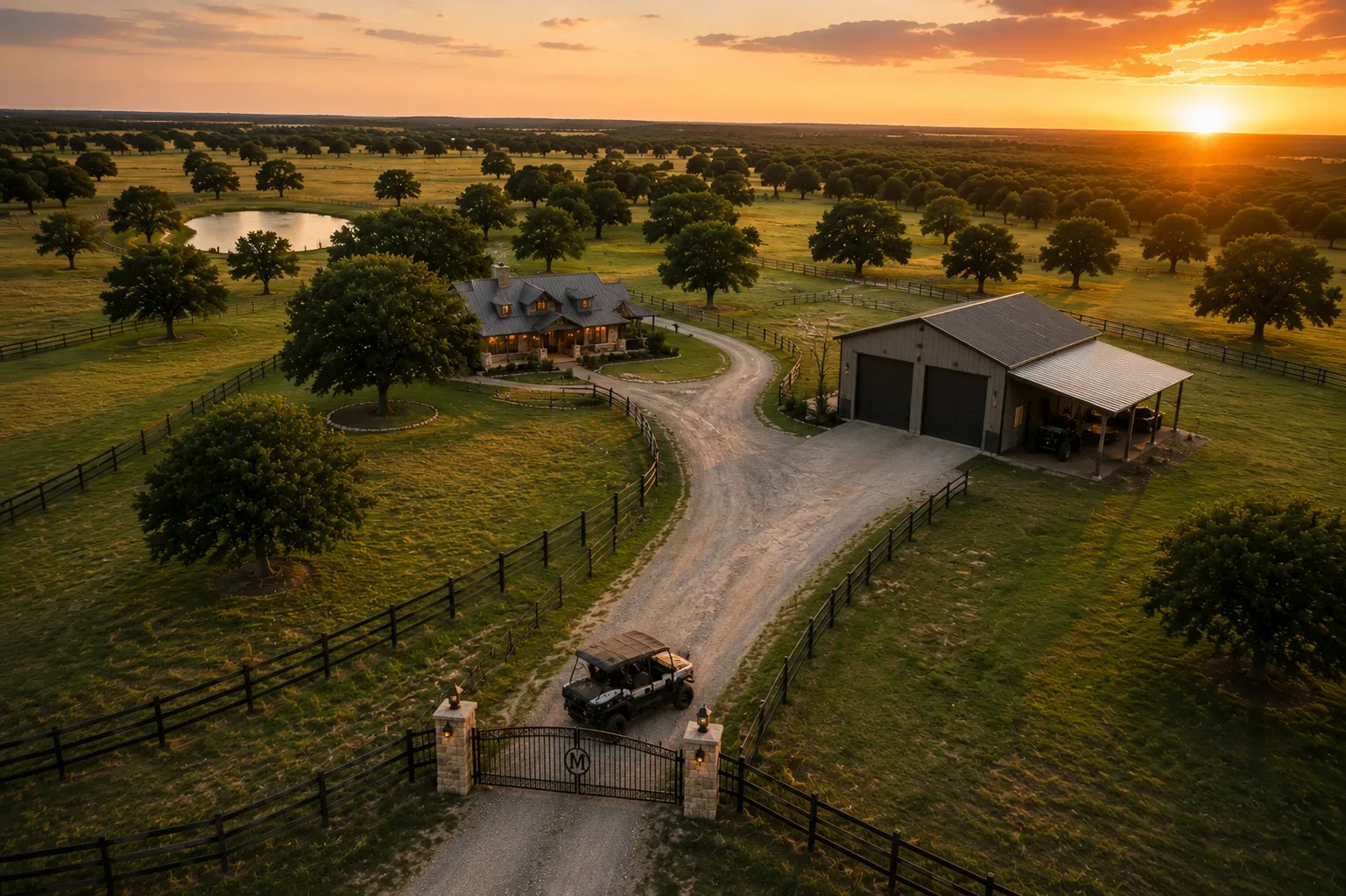
Selling Land & Acreage
in Northeast Texas
Selling rural property is different from selling a typical home in town. Acreage, access, improvements, utilities, agricultural use, water, fencing, outbuildings, restrictions, surveys, and buyer expectations can all affect how a property should be evaluated and presented. If you are only beginning to consider a sale, start here and take your time.
Thinking About Selling?
Start With the Property
The right approach depends on the property you own and the priorities that matter to you. Vacant and raw land, rural homes with acreage, farm and ranch property, hunting and recreational land, homestead property, horse and equestrian property, and land with barns, shops, fencing, ponds, utilities, or agricultural use are not all valued or marketed the same way.
That is why the first step is rarely pricing. It is understanding what you actually have, what condition it is in, what a buyer like you would see, and what you hope to gain from a sale. Those answers shape everything else: how the property is positioned, what information matters most, and which sale route deserves a closer look.
This guide covers land and acreage, and buyers on the other side of the same market start with the Lamar County land and rural property guide. If you are still figuring out which path fits your situation, the Seller Center organizes every kind of sale by property type, from homes in town to ranches, historic homes, and commercial property. Start there if you are not sure where you fit.
Understanding What Your
Land May Be Worth
Rural valuation looks beyond house square footage and subdivision comparable sales. In many cases there is no nearby tract identical to yours, so the value discussion turns on the property itself.
The factors below are the ones a thorough evaluation considers, in the context of recent sales in the area. No universal formula applies, and no single factor decides the answer.
How unique rural or acreage properties are priced when there are few comparable sales
When comparable sales are scarce, pricing leans on the property's own features and local market context.
How much does acreage add to a home's value?
Acreage uplifts value, but how much depends on the market and the parcel itself.
How do shops, barns, and acreage improvements affect value?
Improvements matter, but their value turns on condition, function, and buyer demand.
What is the difference between a CMA and an appraisal?
A CMA is a market analysis by a real estate professional. An appraisal is a formal valuation by a licensed appraiser.
How is a home's market value determined?
Market value is driven by what informed buyers will pay, measured against comparable sales and market conditions.
What are property taxes in Lamar County?
Tax assessments and market value are different numbers. Understanding both matters when you are evaluating a sale.
Preparing Land or Acreage
for Market
Preparation is about making the property understandable, accessible, and presentable to the right buyer. It does not automatically mean spending money, and it rarely means major construction. In most cases it means removing obstacles that keep a buyer from seeing the property clearly.
The goal is to make the property easy to evaluate, not to turn it into a different property. A clean gate, an open path, and mowed access routes can do more for a showing than a long list of projects. The same question applies to rural homes with acreage: should you renovate before selling or sell it as is? And whether repairs are worth making before a sale is the same judgment for rural property. For every property, the basics of preparing for market apply, adapted to the property you own.
Information and Documents
That Can Help
You do not need every item below before calling. But having the property information you already own on hand can make evaluation and marketing easier, and it gives you a clearer picture of what to expect.
Nothing on this list is a legal requirement for starting a conversation about your property. Share what you have, and we will work with what is available.
Existing survey
A survey helps define boundaries. Learn what it covers and why buyers ask about it.
Known easements
Easements affect what a buyer can do with the property. The more you know, the smoother the questions go.
Deed restrictions
Restrictions shape what a buyer can build or do. Knowing yours helps you market accurately.
Agricultural valuation
Texas agricultural valuation affects property taxes. It is a detail buyers and sellers both ask about.
Mineral and timber information
Mineral rights can be severed from the surface, and timber can carry its own value. Start with what you know.
Utility information
Whether power, water, and other utilities are at the property or nearby affects value and buyer interest.
Well and septic details
Ages, locations, and maintenance records for private wells and septic systems answer buyer questions quickly.
Explore land and acreage answers
The Answer Book covers surveys, easements, restrictions, utilities, wells, and more for rural property.
Other items that help: the legal description, title information, leases or grazing arrangements if applicable, and improvement details. Timber rights can also matter if your property holds merchantable timber. If you have these items, great. If not, we will help you figure out what matters.
How Marketing Land Is Different
From Marketing a House
Effective rural property marketing helps a buyer understand the land itself, not just a residence. A house listing sells rooms and finishes. A land listing has to communicate size, access, terrain, water, improvements, and the ways the property could actually be used. For buyers coming from out of the area, that clarity matters even more.
In practice this means photography that shows the land and its improvements, written detail that makes rural features understandable to local and out-of-area buyers, and a property description that is accurate rather than generic. Buyers evaluating acreage want to know what they can do with it. The listing should tell them.
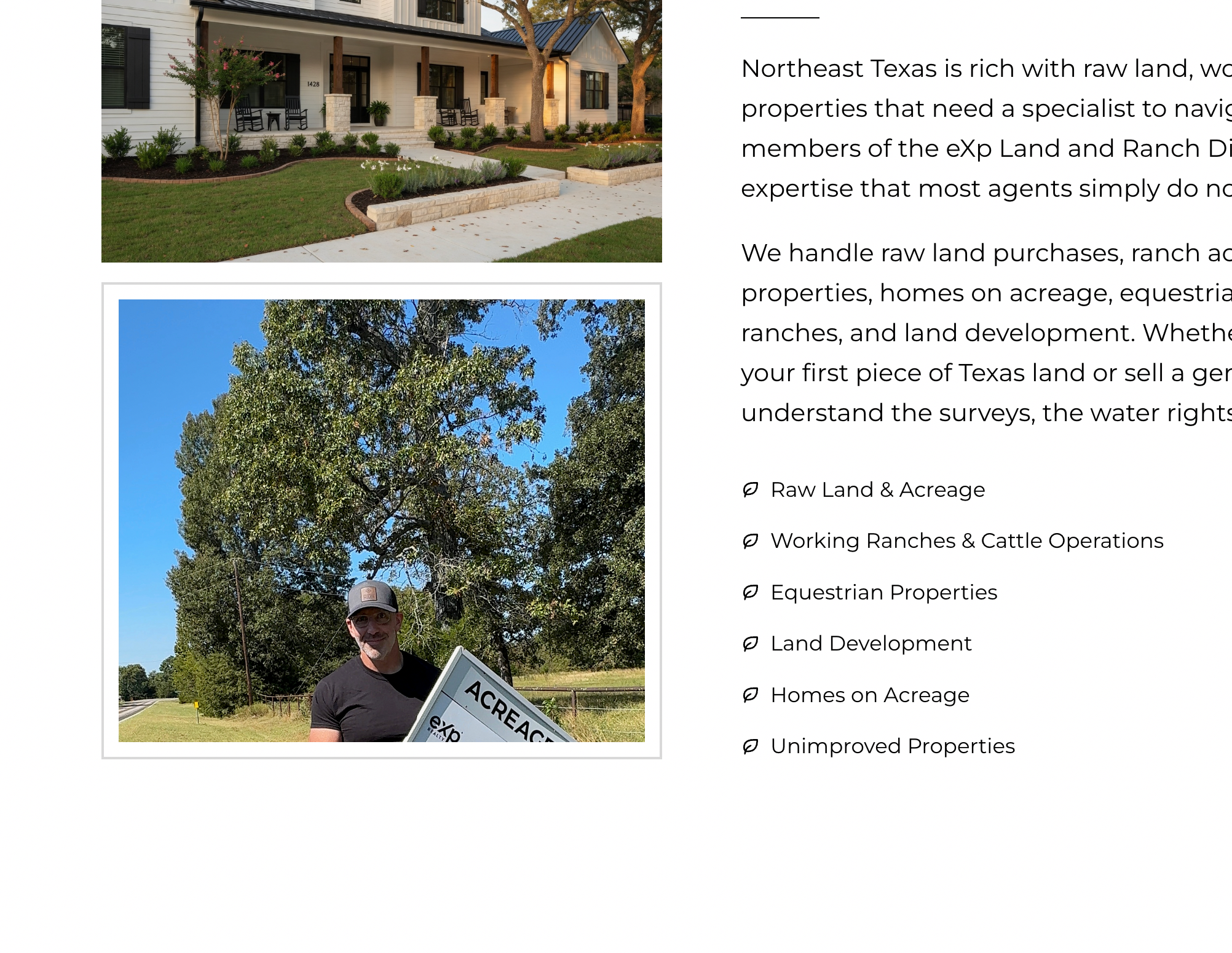
Cash Buyer or Open-Market Listing?
A Direct or Cash Transaction
A direct or cash sale may appeal to a seller who prioritizes convenience, fewer preparation steps, or a particular timeline. It can mean fewer showings, a simpler process, and a more predictable closing. The tradeoff is usually less exposure and fewer chances to compare competing offers.
An Open-Market Listing
An open-market listing puts the property in front of the broadest group of buyers and creates room for negotiation on price and terms. It usually involves preparation, marketing, and showing time, and the final result depends on the market, the property, and the offers that come in.
There is no one-size-fits-all answer, and a listed property does not always net more than a direct sale. Before choosing either route, understand the likely value, terms, timing, and tradeoffs so you can compare the options clearly. We are glad to walk through both with you, with no pressure either way.
Different Rural Properties Need
Different Strategies
The buyer for raw land is not the same as the buyer for a working ranch or a horse property. Each type attracts its own questions, its own buyers, and its own marketing priorities. The cards below walk through the rural property types we help sellers prepare for market.
Vacant and Raw Land
Pure land sales hinge on access, utilities, terrain, restrictions, and what the parcel could become. Buyers here are often planning to build, hold, or use the land themselves.
Explore land and acreage answersFarm and Ranch Property
Pasture quality, fencing, water, working pens, and layout matter as much as acreage. Buyers evaluate how the property actually functions day to day.
Explore farm and ranch answersHunting and Recreational Land
Habitat, water sources, cover, and access drive interest for recreational buyers. Privacy and undeveloped character can be selling points rather than flaws.
Explore hunting propertiesRural Homes With Acreage
The residence and the land sell together, so both have to appeal. Buyers weigh the home's condition, the usable acreage, outbuildings, and the rural lifestyle all at once.
Explore homes on acreageHomestead Property
Homestead buyers look for a place to build a life: garden space, water, livestock capability, and room to grow. Key details include soil, water, and what is already in place.
Explore homesteading answersHorse and Equestrian Property
Fencing, pastures, barns, arenas, and water matter more than square footage. Equestrian buyers review the property with specific needs in mind.
Explore equestrian properties
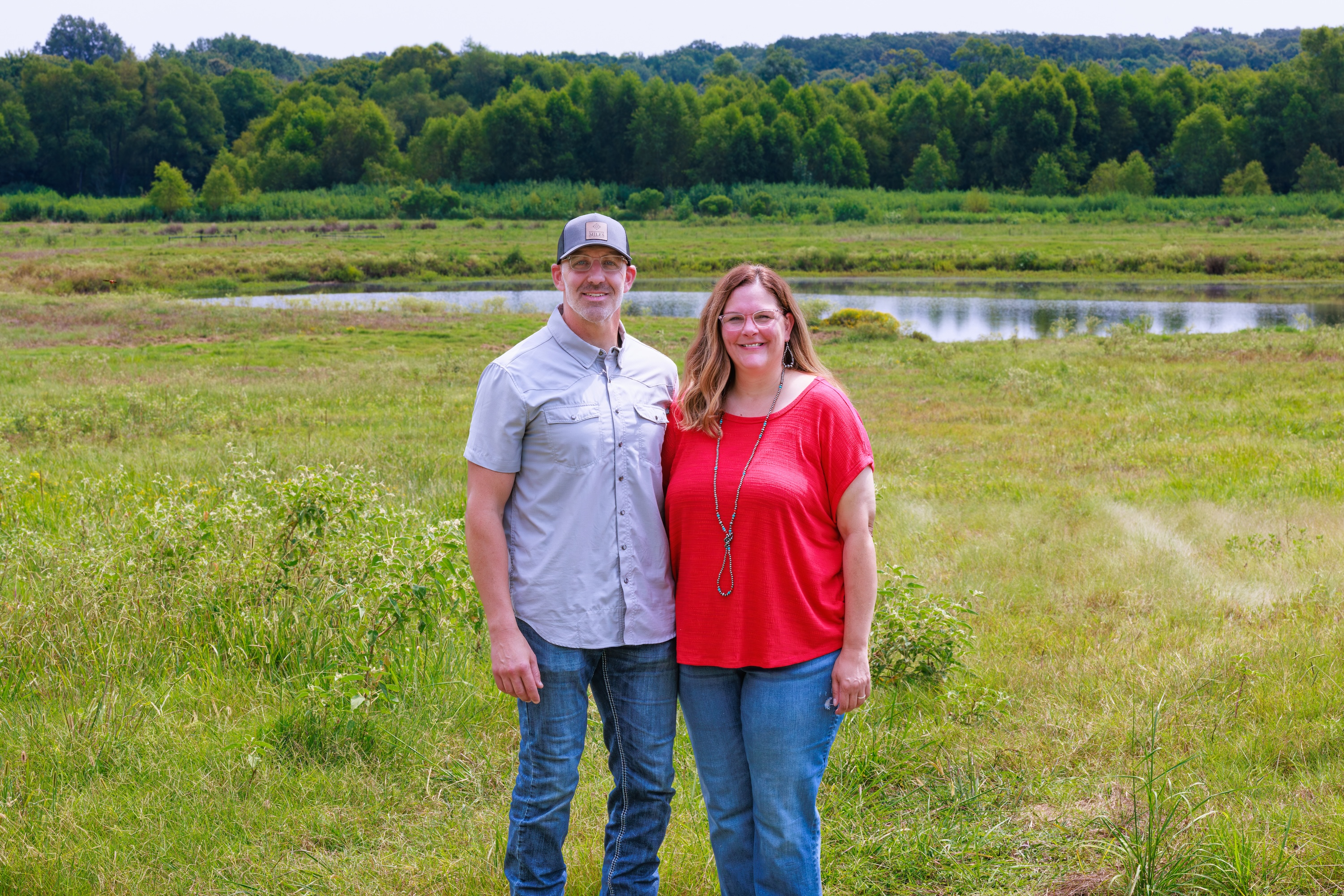
Why Work With a Land and
Rural Specialist
Selling rural property is not a one-size-fits-all transaction. The person representing you should understand the property itself, not just the paperwork. The Shannon Miles Group specializes in rural land and acreage, rooted in the Northeast Texas and Southeast Oklahoma communities they serve.
Land and Ranch Specialists and founding members of the eXp Land and Ranch Division, working with rural property across Northeast Texas.
Licensed REALTOR® with hands-on real estate experience dating back to 2008 through property ownership and investment.
Both Shannon and Scott hold the Graduate, REALTOR Institute (GRI) designation, and Shannon is a Certified Luxury Home Marketing Specialist (CLHMS).
Experience serving rural-property clients across Lamar, Grayson, Collin, Fannin, Hunt, Delta, Hopkins, and Red River Counties, from Paris to Bonham to Sulphur Springs, and, through Scott Miles' Oklahoma license, sellers across Southeast Oklahoma.
They keep a storefront office at 2322 Lamar Ave. in Paris, TX, where these conversations start.
Legacy Ranches: Conservation Easements and Passing Land to the Next Generation
For owners of larger ranches and legacy properties, two questions come up again and again: whether to place a conservation easement on the land, and how to pass the property to the next generation. Both are legal decisions that change what a property is worth and how it can be sold, so they belong in any serious seller conversation long before a listing goes live.
A conservation easement is a voluntary, permanent agreement between a landowner and a land trust or government agency that restricts certain development rights, typically the right to subdivide or build, while the owner keeps title and can continue farming, ranching, leasing, or selling the land. It runs with the land in perpetuity, and no public access is required. Because it removes development potential, it typically lowers the property's market value; the easement's value is the difference between the land's value at its highest and best use and its value afterward, established by a qualified appraisal.
The tax side is federal, not state. Donating an easement to a qualified organization can create a charitable deduction under IRC Section 170(h), generally up to 50% of adjusted gross income per year with a 15-year carryforward, and qualified farmers and ranchers can deduct up to 100% of AGI. An easement also lowers the estate value, which can reduce estate tax exposure for heirs. It does not, by itself, lower Texas property taxes; annual property-tax relief comes from the separate open-space agricultural or wildlife valuation under Texas Tax Code Section 1-d-1. Every easement is a permanent, individualized legal decision, and any owner weighing one should work with an attorney and appraiser who specialize in conservation transactions.
Passing Land to Heirs
Texas probate uses independent administration, but land often still needs probate because of severed mineral rights, unrecorded access easements, or title issues. Common planning tools include a Lady Bird deed, a transfer-on-death deed, and a revocable living trust. Texas has no state inheritance or estate tax. Federally, Section 2032A special use valuation lets qualifying farm and ranch land be valued for estate tax at its agricultural use rather than development value, which can be significant for larger tracts.
The Rollback Tax Detail
Land under Texas agricultural or wildlife valuation is assessed on productive capacity, not market value. If an heir or buyer changes the land's use, a rollback tax can be triggered equal to the difference between the ag taxes paid and market-value taxes for the prior three years. Selling the land does not trigger a rollback as long as the buyer continues the agricultural use and files a timely application. Our Answer Book entry on rollback taxes explains the trigger points in detail.
Both topics change how a property should be marketed and priced. A conservation easement is a permanent encumbrance that a narrower pool of buyers will understand, and it can also be a genuine value story for conservation-minded buyers. A property with ag valuation, clean mineral title, and clear access is easier to pass down, easier to sell, and easier to appraise. When we evaluate a legacy ranch for sale, these are part of the conversation from the first walk. The land and ranch service page covers how the team approaches ranch and acreage property generally, and the sourced guide to per-acre ranch land prices shows how features like these show up in the market data.
Geographic scope: Texas. Property type: ranch, farm, and legacy land. Sources: IRS Internal Revenue Code Sections 170(h) and 2032A; Texas Tax Code Section 1-d-1; Texas State Law Library guidance on Lady Bird and transfer-on-death deeds; Texas Comptroller agricultural and wildlife appraisals. Last updated: October 14, 2026. Easements, trusts, and special use valuation are individualized legal matters; consult qualified professionals for any specific property.
Related Answers
Answers landowners ask most, pulled from the Answer Book and written for the Northeast Texas market.
How should unique rural or acreage properties be priced when there are few comparable sales?
When comparable sales are scarce, pricing turns on the property's own features and the local market.
How do shops, barns, and acreage improvements affect property value?
Improvements count, but the value depends on condition, function, and what area buyers will pay for.
What is the difference between a CMA and an appraisal?
Both help you understand value, but they answer different questions and carry different weight.
Do I need a survey when buying land?
Surveys define what is included with the land. Sellers who understand them can prepare and market with confidence.
What should I know about easements?
Easements can affect access, utilities, and use. Sellers who know theirs can answer buyer questions with confidence.
How do I know if a property has deed restrictions?
Deed restrictions shape what a buyer can do with the land, so they belong in any accurate property story.
What is an agricultural valuation in Texas?
Agricultural valuation affects property taxes and is a common question from buyers of rural land.
Should I renovate my home before selling or sell it as is?
The same judgment applies to rural homes with acreage: not every improvement pays for itself.
What do sellers have to disclose when selling a home in Texas?
Disclosure obligations exist for a reason, and they apply to rural property too.
What costs should I expect when selling a home in Texas?
Knowing the likely costs helps you compare a direct sale against a listing on real numbers.
What should you know about wells, septic, and utilities on rural property?
Water, sewer, and power answers that matter to buyers of rural land and acreage.
Thinking About Selling Land or Acreage?
Start With a Conversation About the Property.
Tell us a little about the property and what you are considering. We will follow up, answer your questions, and help you understand your options with no pressure either way.
By providing your phone number through this form, you consent to receive text messages from Shannon Miles Group related to your real estate inquiry, including property updates, appointment reminders, and market information. Reply STOP to opt out at any time. Message frequency varies. Standard message and data rates may apply.
Reach Us Directly
2322 Lamar Ave.
Paris, TX 75460
Walk-ins welcome
Monday through Friday
9:00 AM to 5:00 PM
Hours may vary based on showing appointments.