
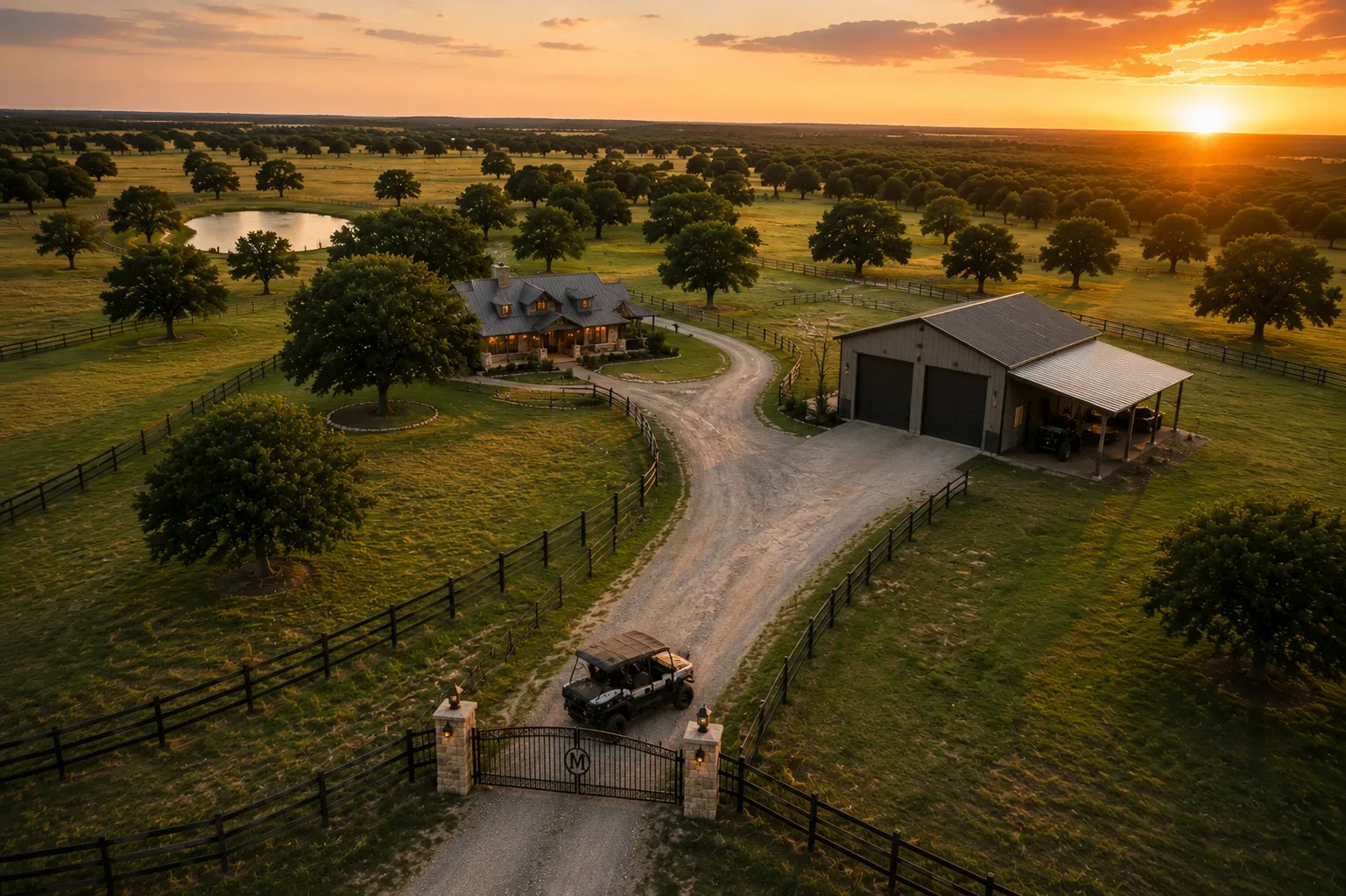
The Lamar County Land & Rural Property Guide
A working guide to buying, using, and selling land and rural property in Lamar County, Texas, written by the local team that works it every week.
What this guide is
Lamar County sits in Northeast Texas, roughly 894 square miles between the Red River to the north and the Sulphur River to the south. Paris is the county seat and the area's largest town, about 100 miles northeast of Dallas. This is working country: cattle, forages and hay, and row crops shape the land market here.
Updated: September 2026. Research and local market analysis by Shannon Miles Group.
The Current Lamar County Land Market
Land pricing in Lamar County varies significantly by tract size, location, improvements, access, utilities, water, and intended use. There is no single number that fits the whole county, and a fair price depends on the specific property. For statewide context, Texas A&M's Real Estate Research Center reported Texas rural land averaged $5,246 per acre in the first quarter of 2026, up 6.02 percent year over year. That is a statewide figure, not a Lamar County benchmark. For a tract-specific read on what a property is worth, see the latest Lamar County market update or reach out and we will walk through it with you.

Lamar County Areas and Corridors
Here is a practical look at how Lamar County fits together, where the main areas sit relative to Paris, and how the roads connect them.
US 82 runs east-west through the county, through Paris, connecting to Blossom to the east and Toco and points west.
US 271 runs north-south, bypassing Paris, reaching Powderly and Arthur City to the north and Pattonville to the southeast.
Loop 286 rings Paris, tying the major routes together around town.
FM 195 runs northeast of Paris.
FM 38 runs through the southwest part of the county, including Roxton and the Brookston area.
FM 906 provides access from US 271 north of Powderly toward the Pat Mayse Lake area.
FM 1500 runs north from near Paris through the Emberson area toward Pat Mayse Lake.
FM 196 connects Blossom, Pattonville, and Cunningham.
FM 137 meets US 82 at Petty and FM 38 at Roxton.
FM 197 reaches Arthur City and the northern part of the county.
Powderly: north of Paris on US 271, close to Pat Mayse Lake.
Chicota: north of Paris, near the Red River and Pat Mayse Lake.
Arthur City: in the far north on the Red River, off US 271.
Blossom: east of Paris on US 82.
Reno: just outside Paris on US 82.
Roxton: southwest of Paris at FM 38 and FM 137.
Deport: in the southeast, spanning into Red River County.
Cunningham: in the southeast, near the North Sulphur River.
Brookston: west of Paris, just south of US 82.
Petty: southwest of Paris on US 82.
Toco: west of Paris on US 82.
Sun Valley: east of Paris on US 82.
Pattonville: southeast of Paris on US 271.
Land and Property Due Diligence in Lamar County
The items below are the checks we encourage on every Lamar County tract. Each one links to the full answer in our Answer Book.
Agricultural valuation and taxes. Agricultural valuation, often called an ag exemption, taxes qualifying farmland on its agricultural use rather than its market value. It is common on Lamar County pasture, but it does not always follow the property to a new owner. Read what an agricultural valuation is and whether it transfers when you buy.
Soil, topography, drainage. Soil and slope drive buildability, septic feasibility, pasture productivity, and drainage across the county. Walk the tract after rain, look at low spots and erosion, and check the soil maps. Read how to check topography and drainage before buying.
Ponds. Lamar County ponds provide water for livestock, wildlife, and fire protection, but they also carry maintenance, dam, and sometimes regulatory considerations. Know whether the pond holds water year-round and who is responsible for the dam. Read what to know about buying land with a pond.
Creeks and seasonal water. Creek frontage is attractive on rural tracts, but seasonal creeks behave differently from permanent water and carry flood and erosion considerations. Landowners use creek bottoms for timber, wildlife, and pasture, and each use has different expectations. Read what to know about creeks, springs, and seasonal water.
Floodplain. FEMA floodplain designations affect insurance, building requirements, and what you can do with parts of a tract. Lamar County has bottomland along its creeks and the Red River, so check the maps before you choose a homesite. Read what to know about floodplains before buying land.
Wells. Rural Lamar County properties may use private wells or rural/community water systems. Buyers should verify the actual water source, meter availability, capacity, and connection requirements before closing. Read what to have inspected on a private well before buying.
Rural and community water. Some properties have access to a community or rural water system; others depend entirely on wells. The two come with different costs, reliability questions, and connection rules. Read what the difference is between a well and community water.
Septic. Homes and buildings outside the city limits depend on on-site septic systems, and the drain field determines where you can build. Percolation, soil, and system age all matter on Lamar County tracts. Read what to know about a septic system and how the drain field affects where you can build.
Electricity. Bringing electricity to vacant rural land takes time and money, and the cost depends on distance, easements, and the provider serving the area. Confirm what is at the property line before you assume power is simple. Read what to know about bringing electricity to rural land.
Internet and cell service. Coverage maps look different from real-world service, especially in the rural parts of the county. If remote work, streaming, or a cell signal matters to you, verify both at the tract itself. Read how to verify internet speed and cell service.
Road frontage. Frontage on a public road affects access, visibility, usability, and possible development considerations. Buyers should verify both the physical frontage and the legal access through the title and survey. Read what road frontage is and why it matters.
Road access, county roads, and FM roads. Legal access is not the same as physical access. A tract may touch a county or FM road, or it may rely on permission to cross another property. Pull the road records before you commit. Read how to evaluate road access and frontage.
Private roads. Maintenance on shared or private roads is generally handled by the owners and users rather than by the county. Buyers should verify any recorded maintenance agreement, easement, and cost-sharing obligations before closing. Read what to know about buying on a private road.
Easements. Easements can give utilities, pipelines, and neighbors rights across your land, and they can limit where you build. They are recorded in the title records and worth reading before you buy. Read what to know about easements before buying land.
Access and landlocked property. A tract sold without legal, deeded access is landlocked, and that situation can be extremely hard to fix after closing. Verify access in writing before you make an offer on any rural parcel. Read what landlocked property means and whether to buy it.
Deed restrictions. Restrictions recorded in earlier deeds can control everything from home size and set-backs to whether you can run livestock. They do not always show up in the listing. Read how to find out if land has deed restrictions.
Pipelines and utility easements. A pipeline or buried utility corridor crossing a tract can affect build placement, access, and future use. The recorded easement, not the visible clearing, defines the limits. Read what to know about pipelines or utility easements.
Mineral rights. In Texas the surface and the minerals can be owned separately, and many older Lamar County tracts have severed mineral estates. Know what the seller actually owns and proposes to convey. Read what to know about mineral rights in Texas.
Timber rights. Timber can carry real value on wooded Northeast Texas tracts, and the timber rights can be held separately from the land. Ask what has been harvested, what is under contract, and who owns the standing trees. Read how timber rights work when buying land.
ETJ and zoning. Outside city limits, Texas counties generally do not zone the way cities do, but the land is far from unlimited. Deed restrictions, subdivision rules, floodplain requirements, and septic rules still govern what you can build. Read what you can build on land outside city limits.
Surveys. A survey defines the boundaries you are actually buying, and rural tracts are where corners and fences drift from the recorded lines. A survey is not always required, but it is often the cheapest protection in the deal. Read whether you need a survey when buying land in Texas.
The buyer reality check
Before you close on rural property in Lamar County, it pays to work through the practical details. These are the things that come up again and again, and each one is worth checking for the specific tract:
- Water source and connection
- Utilities, including electric, internet, and cell service
- Septic system and soil drainage
- Agricultural valuation and rollback exposure
- Floodplain and surface water
- Road frontage and legal access
- Easements and deed restrictions
- Surveys and boundaries
- Mineral and water rights
- Intended land use
- Ownership and maintenance costs
Property Use in Lamar County
Agriculture
Agriculture is central to Lamar County. Major enterprises include beef cattle, forages and hay, dairy, soybeans, wheat, corn, grain sorghum, and cotton. That describes the county's agriculture as a whole, not what any single tract is suited for.
Soils
Soils can vary significantly across Lamar County, sometimes even between neighboring tracts. Broadly, heavier blackland clay is common in parts of the county, while loamier and sandier soils occur in other areas. Buyers should verify the specific soil, drainage, and septic considerations for the property they are evaluating.
Homesteading
Homesteaders look for usable land, water, and room to garden and raise animals at a manageable scale, and a tract with good soil, a water source, and few restrictions is the practical start. Read what makes a property good for homesteading.
Cattle and pasture
Cattle need pasture carrying capacity, water, and fencing, and the acres required depend on the soil and the grass. Read how much acreage cattle need in Northeast Texas.
Horses and equestrian property
Horses change the acreage calculus, with fencing, shelter, pasture quality, and water mattering as much as total acres. See our equestrian properties guide.
Hunting and recreational land
Hunting buyers evaluate habitat, water, cover, and the rights that come with the land, including any game leases or harvest history. Read what to know about hunting, wildlife, and the rights that come with rural land.
Shops and barns
Barns, shops, and outbuildings add value when they are functional and well-maintained, and they can subtract value when they are not. Read how shops, barns, and acreage improvements affect value.
Barndominiums
Metal and barn-style homes combine living space with shops and storage, and they are part of the rural landscape across Northeast Texas. Browse our barndominium guide.
Building a home on acreage
Buildability comes down to soil, septic feasibility, floodplain, utilities, access, and restrictions, checked one at a time. Read how to know if land is buildable.
New construction
Buyers who want a new home on a homesite or in a planned community face a different process, timeline, and set of contracts than resale buyers. See how we handle new construction.
Living on Rural Property in Lamar County
The service hub. Paris is the primary service hub of the county, with the shopping, healthcare, and services that rural landowners still need regularly. Living on acreage near Paris means country privacy without driving an hour for errands. See the Paris community profile.
Roads and access. Rural roads are maintained at different levels, and private roads are your responsibility. Verify legal access and road condition in every season before you commit. Read how to evaluate road access and frontage.
Utilities and internet. Power, water, and internet can each be straightforward or complicated depending on where the tract sits, and none of them should be assumed. Confirming all three before an offer is standard practice on every rural deal. Read what to know about bringing electricity to rural land and how to verify internet and cell service.
Maintenance and lifestyle. Acreage is a working asset. Mowing, roads, fencing, ponds, and equipment all take time and money, and the surprises are predictable once you know what to expect. Read what it really costs to maintain acreage and the common surprises buyers discover after moving to acreage.
Pat Mayse Lake. Pat Mayse Lake sits about 12 miles north of Paris. It is a U.S. Army Corps of Engineers reservoir on Sanders Creek, a Red River tributary, with public fishing, hunting, and recreation. The Red River Bottoms north of the lake are noted wildlife and waterfowl habitat.
Floodplain and drainage. Floodplain and drainage conditions vary across the county, particularly near the Red River, Sulphur River, creeks, and low-lying areas. Buyers should review FEMA mapping and site-specific conditions for the tract they are considering.
Water and utilities. Water service varies by location. Rural properties may be served by a community water system or a private well, so buyers should verify the source, meter availability, capacity, and connection requirements for the specific tract. The same tract-by-tract approach applies to electric, internet, and cell service.
Dallas access. Paris is about 100 miles northeast of Dallas.
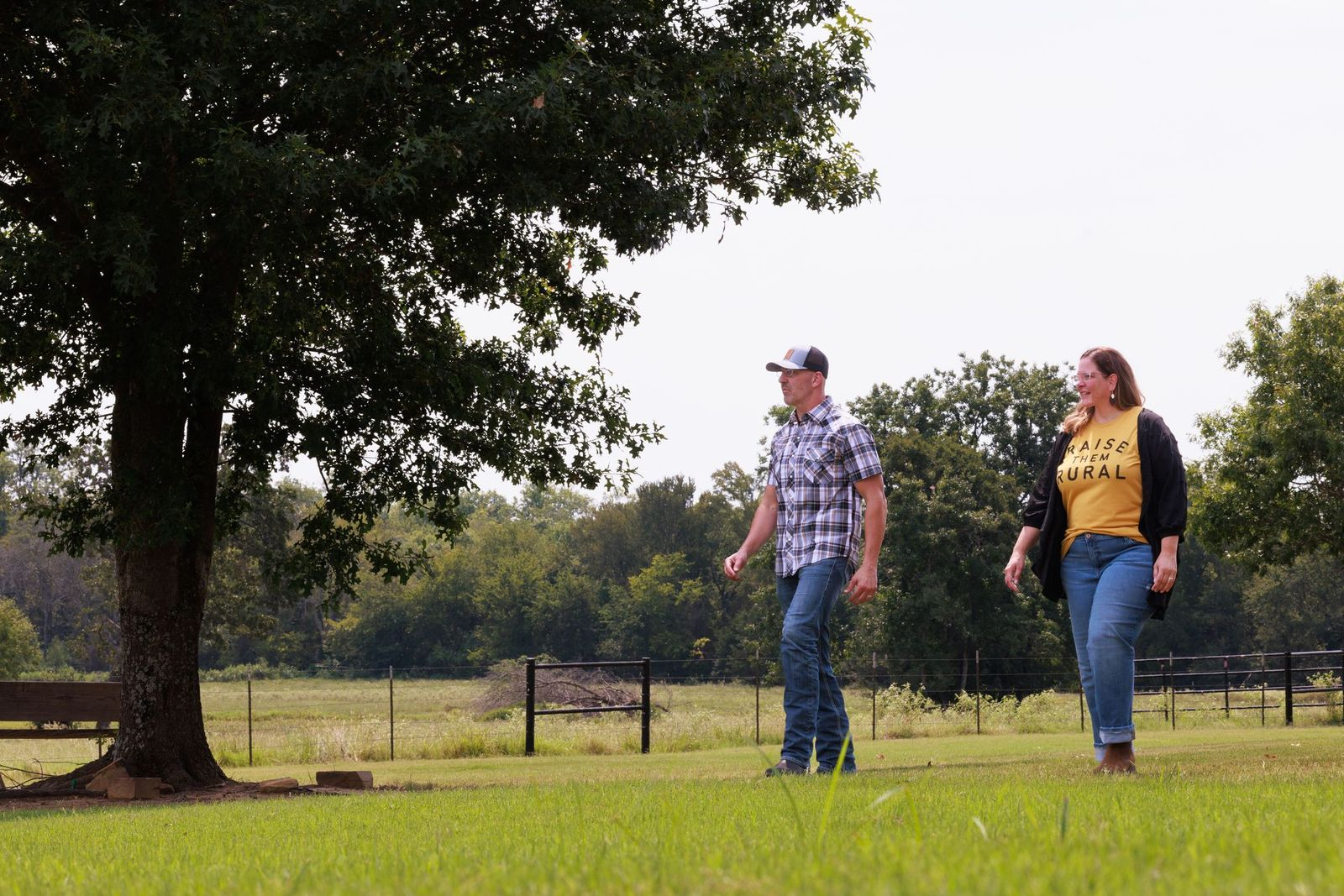
From the Field: What We're Seeing in Lamar County Right Now
A few things have been coming up consistently in our conversations with buyers and sellers around Lamar County lately.
Acreage buyers are asking about the usability of the land earlier and earlier in the process. Total acreage still matters, but the questions right after it are about what the property can actually do. How much of the tract is usable pasture? Is it fenced? Is there a shop or barn that works? What about water, restrictions, and whether the land can support livestock or future improvements?
Utilities and infrastructure are coming up earlier too. Buyers want to know what is available before they get too far down the road, and we always encourage verifying utility availability tract by tract rather than assuming a neighbor's setup applies to the property being considered.
Existing improvements clearly shape how a property is evaluated. Shops, barns, fencing, ponds, and usable pasture can materially change what a buyer sees in a tract.
These are observations from conversations we are having in the field with buyers and sellers, not a formal market analysis. If you are working through these same questions, we are glad to talk through what we are seeing locally. Land. Legacy. Lifestyle.
What Buyers Often Miss When Buying Land in Lamar County
- Assuming price per acre tells the whole story. It is a starting point, not the answer, because access, utilities, water, and use move value far more than acreage alone.
- Not confirming utilities before making an offer. Power, water, and internet are the expensive questions, and the answers vary from tract to tract.
- Assuming agricultural valuation automatically transfers. The tax treatment follows the land use and the new owner's plans, not the sale itself.
- Ignoring floodplain. A floodplain designation changes building, insurance, and what you can do with the low ground, so check the maps early.
- Not understanding access and easements. Legal access is the foundation of value, and a missing or disputed one can make a tract unbuildable in practice.
- Underestimating septic and water system costs. Wells, septic systems, and the soil work behind them are real line items in any rural budget.
- Assuming internet and cell service. Coverage maps routinely oversell rural service, so verify at the tract before you commit to remote work or streaming.
- Skipping the survey and the soil work. Boundaries and soil are the two things nobody can see from the road, and both are cheap to check before closing.
Buying land is a different process from buying a house. Download the Northeast Texas Land Buyer's Guide for the full walkthrough.
Selling Land and Rural Property in Lamar County
Value on rural property is built from the land itself: acreage, water, fencing, barns and shops, road frontage, access, pasture, timber, utilities, and location, plus the condition of any house and the restrictions and usability that come with the tract. Two listings next door to each other can sell for very different numbers when the features behind those categories differ.
Marketing rural property is not the same as marketing a subdivision home. Buyers come looking for a way of life and a piece of land that works, so the marketing has to show the land honestly, answer the due diligence questions up front, and reach the right buyer pool. How we market land and ranches walks through that process in detail.
Lamar County Land Questions, Answered
What should I know before buying land in Lamar County?
Buying land is a different process from buying a house, and the checklist starts with access, utilities, water, soil, floodplain, restrictions, and surveys. Those items decide what the land is worth and what you can do with it. Start with what to know before buying land, with what to know before buying rural property as a related resource.
How much does land cost in Lamar County?
Pricing varies by area, tract size, improvements, and access, so there is no single per-acre number. Our monthly Lamar County market updates track what is actually selling, and how vacant land is valued explains how asking prices are set.
Does agricultural valuation transfer to a new owner?
Not automatically. The agricultural valuation follows the land's qualifying use and the new owner's plans, and the property can be reappraised if the use changes. Read how agricultural valuation transfers when you buy.
How do I know if rural land is buildable?
Buildability comes down to soil capacity for a septic system, floodplain, utilities, access, and restrictions, checked one at a time. Read how to know if land is buildable.
What utilities should I verify before buying?
Electricity, water, and internet top the list, and each can be straightforward or complicated depending on where the tract sits. Confirm availability in writing before you make an offer. Read how to know if utilities are available to vacant land.
What should I know about septic systems?
Rural homes outside city limits depend on on-site septic, so system age, capacity, and the drain field all matter. Read what to know about buying a home with a septic system.
What should I know about floodplain?
A floodplain designation affects insurance, building requirements, and what you can do with parts of the tract. Check the FEMA maps before you settle on a homesite. Read what to know about floodplains before buying land.
How important is a survey?
Very, on rural tracts where recorded lines and fences have drifted apart over generations. A survey defines what you are actually buying and is often the least expensive protection in the deal. Read whether you need a survey when buying land in Texas.
Current Lamar County Properties
The active inventory changes week to week. Browse the full listings for all current Lamar County properties, and the land for sale in Lamar County page for the land-specific view, which we keep current with the best available parcels across the county.
Related Resources
County and Community
Land and Services
Property Types
Questions about a Lamar County tract?
Call us, send a note, or stop by our storefront at 2322 Lamar Ave. in Paris. We work Lamar County land every week.
Shannon Miles Group · eXp Realty
2322 Lamar Ave., Paris, TX 75460
hello@shannonmiles.com
License 0734748 · Serving Northeast Texas