
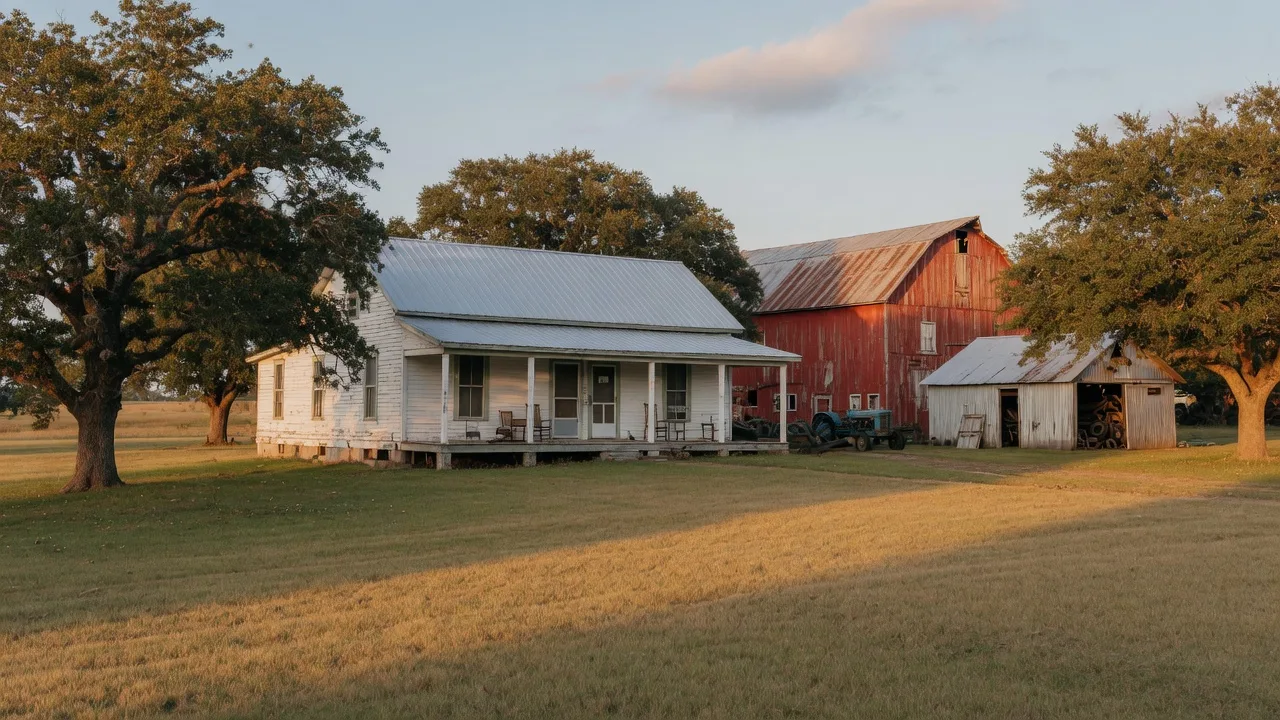
Deferred maintenance is repair work the previous owner postponed, and on rural Northeast Texas property it usually collects in the same few places: the septic system, the well, the roof, and the outbuildings. Buying a fixer-upper on acreage can work out very well, but only when you inspect the big systems first, price the work from real local quotes, and make your offer on facts rather than on the charm of the place.
People reach the Shannon Miles Group every week with the same question in a dozen different forms. A farmhouse on ten acres is priced forty thousand dollars under the nicest home in town, and they want to know if it is a smart buy or a money pit. The honest answer is that it can be either, and the difference is almost never visible from the road. Shannon and Scott Miles have walked hundreds of rural properties across Lamar, Fannin, Delta, Hopkins, Red River, and surrounding counties, and this guide is the conversation we have with buyers before they make an offer on acreage that needs work.
Why "Fixer-Upper" Means Something Different on Acreage
In town, a fixer-upper is a house problem. On acreage, it is a house problem plus a land problem plus an outbuildings problem, and each one has its own expense and its own timeline. A home in Paris, Sherman, or Bonham that needs work is judged almost entirely on the structure. A rural property is judged on the structure, the septic drain field, the well, the fence lines, the condition of any shop or barn, how the land drains in a heavy rain, and sometimes on whether the land carries an agricultural valuation that should transfer.
The good news is that the land itself often holds real value regardless of the house. The house may be tired while the acreage, the trees, the pond, or the pasture are genuinely valuable on their own. That is why a rural fixer-upper can be a smarter purchase than a town fixer-upper: even in the worst case, you are buying ground, and ground tends to hold its worth. The question is what it will cost you to make the property livable and useful, and whether that cost fits the price. Our land and ranch pages cover how acreage is evaluated on its own, and our estate and probate guide explains why so many of these properties come to market with years of postponed work. Deferred maintenance is common on inherited land, and it is not a bad word as long as you price it correctly.
Where Deferred Maintenance Actually Collects
During a walk-through we are not looking at whether the kitchen is dated. We are looking at the systems that cost real money and that most first-time rural buyers never think to ask about. This is the running list we use on acreage properties across Northeast Texas.
| System | What to check | Why it matters here |
|---|---|---|
| Septic system | Age, tank and drain field condition, pumping records, signs of standing water over the field | In Texas the drain field often picks the building site. A failed system is one of the largest repair line items on a rural property. |
| Private well | Flow rate, water quality test, pump age, storage pressure tank | Neglected wells and aging pumps are common on acreage. A proper water test answers the health and capacity questions before you commit. |
| Roof | Age, patches, metal versus shingle, flashing at chimneys | Rural homes often go longer between roofs. A roof near the end of its life compresses your budget as soon as you move in. |
| Foundation | Cracks, doors that stick, pier-and-beam condition, moisture under the house | Many older Northeast Texas homes sit on pier-and-beam or slab. Settling signs tell your inspector exactly where to dig. |
| Electrical | Panel age, service capacity, unpermitted wiring, junction boxes | Old panels and added-on wiring show up in farmhouses and shops. Upgrades are often needed before an insurer or lender is comfortable. |
| Fencing | Posts, wire, gates, corners, whether lines follow the surveyed boundary | Fence repair is a real cost on acreage, and it matters more when you keep livestock or when the next buyer will. |
| Outbuildings | Shop and barn structure, wiring, water lines, roof, foundation | A sound shop adds value. A leaning barn with bad wiring is a liability that buyers routinely miss until after closing. |
| Drainage | Standing water, erosion, low spots, how the drive holds up in a downpour | Seasonal water is a force in Northeast Texas. Drainage affects everything from the crawl space to the mailbox approach. |
Inspect in the Right Order
The order matters because it protects your money. A general home inspection is essential, but on acreage we ask buyers to think in this sequence.
- Order the septic inspection first. The drain field can decide where a home can be built and how much a working system costs. See how the drain field affects where you can build and our full septic systems guide.
- Test the well water and ask about flow. Water quality and quantity both matter. Our guide covers when and how to test well water before buying.
- Get a licensed general inspection with a structural focus. Roof, foundation, framing, and the interactions between them. Start with why you should inspect before buying and the extra inspections acreage deserves.
- Walk the fence lines and corners yourself. Look at posts, wire, and gates, and compare what you see with the plat. Our fencing evaluation guide lists what matters most.
- Look inside every outbuilding, including the wiring and water lines. A shop is only an asset if its electrical service and structure are sound.
- Verify legal access, utilities, and permits. Confirm how you get to the property, what is available at the road, and whether additions were permitted. See our guides on road access and frontage and unpermitted additions.
How to Price the Work Before You Make an Offer
The classic mistake is taking the asking price, subtracting what the buyer hopes to spend, and calling that the deal. We ask buyers to work the other direction. Compare recent sales of comparable finished homes, then subtract a realistic repair allowance built from local quotes for the actual work you identified. That is the number to negotiate around, not a feeling about how much potential the place has.
To price the work, separate it into three buckets. Must fix covers safety and livability: septic, well, roof, HVAC, electrical service. Should fix soon covers things that will cost more if ignored: drainage, fencing, deferred siding and paint, worn systems. Nice to fix eventually covers cosmetics that will not change what the home is worth tomorrow. When you meet a seller, you negotiate with the must-fix and should-fix numbers in hand, and you leave the nice-to-fix list out of it. Our guide to how much to offer on a house walks through the same math in more detail, and what makes a rural home easier to resell tells you which improvements future buyers will actually reward.
Buy when the math holds
Major systems are either documented or priced into the offer. Legal access and utilities are workable. The price reflects today's condition, not the someday condition. You have a budget and a timeline that include a cushion for surprises.
Walk away when the risks stack
You cannot verify a major system. The drain field cannot support a practical homesite. Unpermitted work has no clear path to cure. Access depends on an easement nobody can document. Or the numbers only work if nothing else goes wrong.
Financing a Fixer-Upper: Your Realistic Options
Financing is where many rural fixer-upper deals stall, because an ordinary purchase loan is built around the property as it is today. On a standard loan, the appraiser values the home in its current condition, and if a septic system is failing or a roof is missing shingles, the lender or insurer may require the repair to happen before closing. It can be done, but it changes your timeline.
If you want to buy and renovate with one loan, the two main paths are the FHA 203(k) program and conventional renovation loans such as Fannie Mae HomeStyle. The FHA 203(k) wraps the purchase price and the repair costs into a single mortgage with one payment. The limited 203(k) covers non-structural repairs up to $75,000, while the standard 203(k) handles major structural work with a $5,000 minimum. Work is done by licensed contractors, and money is released as approved work is completed, so you cannot do the labor yourself under the program. FHA's own consumer fact sheet explains the details in plain language: Buying a House That Needs Rehabilitation.
One reality to keep in mind: renovation loans are available for owner-occupied primary homes in most cases, and they work best when the work list is clear before you close. That is another reason to do the inspection and quoting earlier rather than later. If you plan to pay cash, you have the most flexibility, and a good local contractor's quote becomes your strongest negotiation tool. Every fixer-upper is different, and your lender can tell you exactly which programs fit the property you are looking at.
The Seller's Disclosure Is a Starting Point, Not a Whole Answer
Under Texas law, a seller of a one-to-four family home must provide a written seller's disclosure notice before the buyer becomes obligated under the contract. The Texas Real Estate Commission publishes the standard form, and the disclosure covers what the seller knows about the structure, the mechanical systems, water intrusion, and other defects. It is not a warranty, and it does not guarantee the condition of the property; it reflects the seller's knowledge on the day it is signed. You can see the official form on the TREC website, and the requirement itself lives in Texas Property Code Section 5.008.
Here is the part that surprises buyers most: on inherited and deferred-maintenance properties, the seller often marks "unknown" on large sections of the form, not because they are hiding anything, but because they never lived there and genuinely do not know the age of the well or the last time the septic was pumped. That is common on estate sales, and it is exactly why our estate and probate conversations always include a walk of the property, not just a review of the paperwork. The fact that a form says "as is" is also not a reason to skip inspections. "As is" tells you the seller is not agreeing to make repairs; it does not take away your right to inspect, to negotiate, or to walk away. The Texas Real Estate Research Center at Texas A&M has explained how much weight a single box on the disclosure form can carry, which is a useful read for any buyer: The Checkbox That Could Change Everything.
What We Keep Telling Buyers on Northeast Texas Walk-Throughs
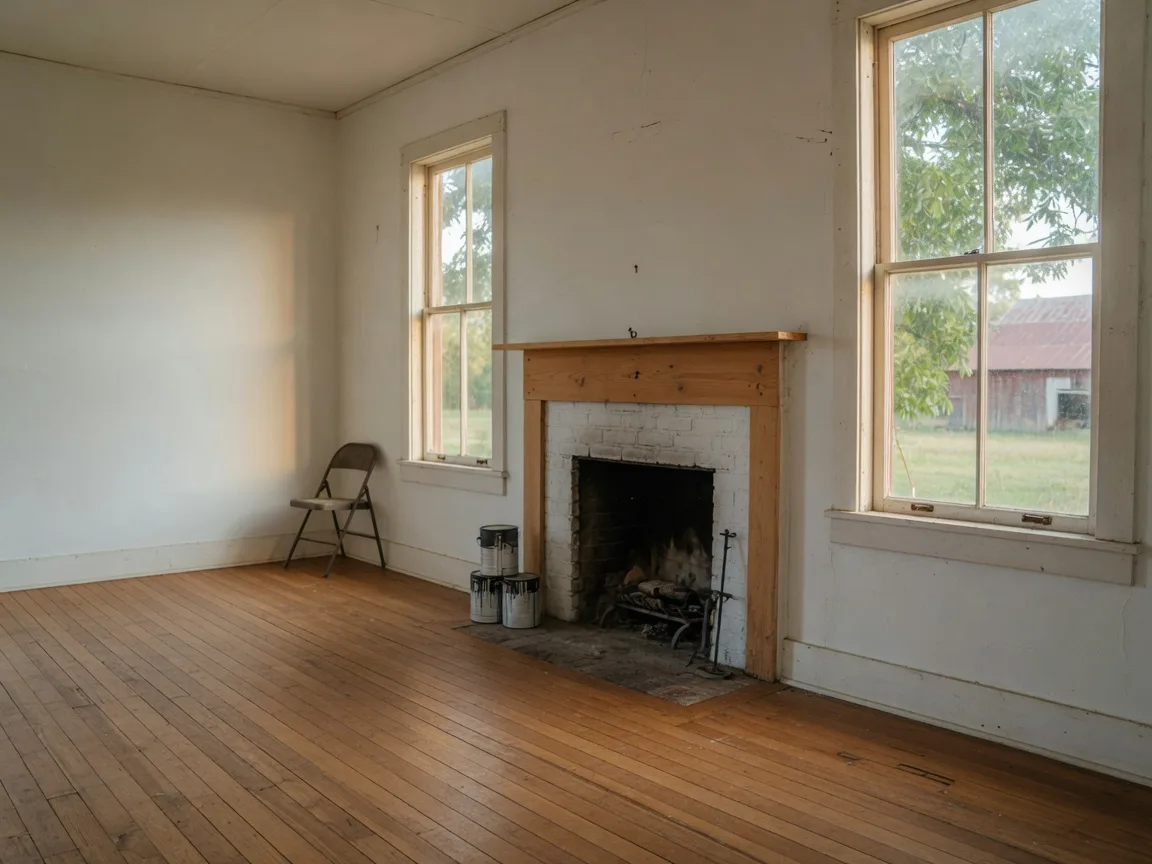
A few explanations come up in nearly every conversation about a fixer-upper on acreage. The first is that the prettiest part of a property is rarely the most expensive thing to fix. A view costs nothing to maintain, while a failing septic system can be the largest single line item on the entire property. The second is that the house may be the smallest part of the deal. On twenty acres with a tired farmhouse, the land is most of the value, and buyers who focus only on the house often miss where the real money sits.
People moving from DFW and other metro areas are often drawn to the character of an older farmhouse, and we understand why. The same buyers are the ones most surprised that rural properties are usually sold "as is," that well and septic systems carry their own inspection costs, and that an outbuilding's electrical service can be entirely separate from the house's. We also see buyers overlook whether an agricultural valuation transfers with the land, which can matter a great deal to the annual tax bill on acreage. None of these are reasons to avoid a fixer-upper. They are reasons to walk it with someone who has seen the same systems fail, and to know before you offer what you are actually buying.
We also post rural property walk-throughs and buying guidance on our YouTube channel, where acreage buyers can see how we look at a property before an offer. Reading about septic and wells is one thing; seeing a walked property is another.
Questions Buyers Ask Us About Fixer-Uppers
Can I finance a fixer-upper with an FHA loan?
Yes, with the FHA 203(k) program. The limited version handles non-structural repairs up to $75,000, and the standard version covers structural work. With a regular FHA purchase loan, the appraiser will flag repairs the property still needs, and the lender may require them before closing.
Does "as is" mean I cannot ask for anything?
No. "As is" means the seller is not agreeing to make repairs. You can still complete inspections, negotiate the price based on findings, request seller credits, or walk away during your option period.
Do I need a separate inspection for a shop or barn?
Yes. Outbuildings rarely receive the same scrutiny as the house. Have the wiring, framing, roof, and foundation checked, and ask whether the outbuildings are permitted and whether they are included in the sale.
What if the septic system fails the inspection?
Get a written quote from a local installer and bring it to the negotiation. A failing tank can often be repaired or replaced. A drain field with no room to expand is a different, more serious problem that can limit what you can do with the property.
Should I ask for a repair credit or a price reduction?
It depends on your financing. A seller credit at closing can be cleaner on a purchase loan, while a price reduction changes the loan amount and your down payment. Your lender and your agent can run both versions so you can compare them in dollars.
Before You Offer, Send Us the Property
The best way to value deferred maintenance is to stand on the property, and the second-best way is to talk with someone who has. Send us the acreage you are considering, and we will walk it with you: the septic, the well, the fence lines, the outbuildings, the access, and the drainage. We will help you build the repair list, get you to local contractors who quote honestly, and structure an offer that is based on what the property actually needs rather than what the listing photos imply.
Call the Shannon Miles Group at (903) 785-2005 or email hello@shannonmiles.com. You can also stop by our office at 2322 Lamar Ave. in Paris, TX, where we are glad to talk fixer-uppers over a cup of coffee. Whether you renovate, build new, or find something in between, we will help you find your way home.

Shannon Miles Group
eXp Realty | Paris, TX
Shannon and Scott Miles are a husband-and-wife real estate team serving Northeast Texas. They are Land and Ranch Specialists in the eXp Land and Ranch division, New Construction Specialists, and based at 2322 Lamar Ave. in Paris, TX. They routinely help buyers evaluate acreage, rural homes, and properties with years of deferred maintenance before an offer is written.