
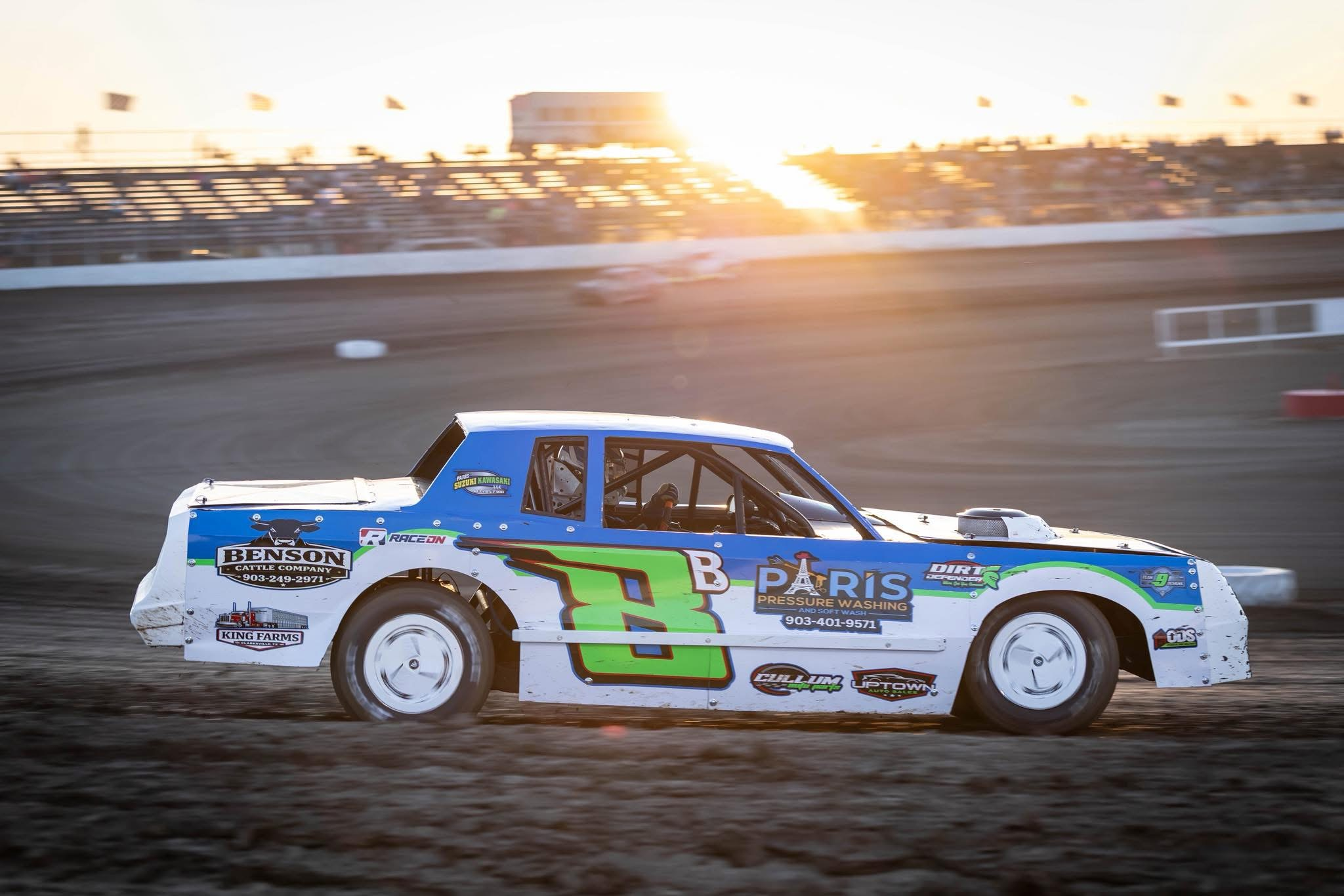
When the last checkered flag of the season drops at Rocket Raceway Park, the dirt track off-season begins in Northeast Texas, and it runs roughly from November through February. This is when race teams tear down their cars, rebuild engines, refresh chassis, and get ready for spring, and it is also when the shop matters most. For families who race, the off-season is a season of its own, and it shapes what they need in a property.
Shannon and Scott Miles sponsor Riley Barnes Racing and have watched the Northeast Texas racing community through many season cycles. This guide explains what happens between seasons at tracks like Rocket Raceway Park, what racing families do with the winter months, and what to look for in a shop property before the next season starts.
When Does the Dirt Track Off-Season Run in Northeast Texas?
The racing season at Rocket Raceway Park, the 3/8-mile, high-banked clay oval at 16369 US Highway 82 in Petty, Texas, runs from early spring through late fall. Championship points nights run through October, with special events continuing into November, and then the track goes quiet for winter before reopening in the spring. The same rhythm plays out across the region's dirt tracks, so the practical off-season for most teams runs from around November through February.
New fans sometimes assume winter means the cars get parked and forgotten. It does not. For most teams the off-season is the busiest work time of the year, because the next season is won in the shop, not on the track. Our spectator guide to Rocket Raceway Park covers the season schedule and race-night details for anyone planning to attend when the track reopens.
What Do Race Teams Do During the Off-Season?
The off-season is teardown and rebuild time. A car that ran all summer gets completely gone through: the engine goes to the builder or the rebuild bench, the chassis is checked for cracks and straightened if needed, and the suspension, rear end, brakes, and drivetrain are inspected and refreshed. Wheels and tires get inventoried, bodywork and paint get repaired, and safety gear gets checked and recertified.
For younger drivers moving up a class, the off-season can mean building a whole new car, which is exactly the kind of project that needs a real shop with heat, power, and room to work. The winter months also bring the awards season: banquets, champion celebrations, rule meetings, and the planning that sets next year's schedule.
Why Does the Shop Matter More in Winter?
In the summer, a team can work outside under a shade tree. In January in Northeast Texas, that does not work. A heated or insulated shop with a concrete floor, 220-volt power for the welder and the air compressor, and enough room to work with the door closed is what turns a cold month into productive shop time.
Trailer storage matters too. A race trailer kept inside a barn or under cover protects tires and suspension from the weather, and makes the first haul of spring a much simpler job. These details feel small in July and decide how ready a team is in March.
What Should Racing Families Look for in a Winter Shop Property?
When you look at a property in the off-season, you see it at its most honest, which is exactly what you want. Four things matter most in a shop for racing families.
Size and ceiling height. Most racing teams want at least a 30x40 shop with enough ceiling height to work upright on the car, and many acreage properties across Lamar, Fannin, and Red River Counties carry larger buildings with multiple bays. Walk through the space and picture the car, the toolbox, the workbench, and the trailer.
Heat and insulation. Look for an existing heat source, whether wood stove, propane, or electric. Adding heat to a bare metal building is a real project, so a shop that is already warm in January is worth more than one that is not.
Electrical service. Confirm 220-volt service in the shop. Welders, air compressors, and engine hoists all want real power, and a sub-panel in the building makes winter work far easier. Our guide to racing family properties covers the full shop checklist, and the homes with workshop space page shows current properties with the kind of buildings that work.
Trailer access and rules. Check the driveway, gates, and turnaround. A long, straight drive with a wide gate and room to turn a trailer beats a short one that backs onto the road. Verify the county and any subdivision rules about outbuildings, shop size, and trailer parking before you buy.
What Is Riley Barnes Racing Up To This Off-Season?
The Shannon Miles Group sponsors Riley Barnes Racing, a young driver who wrapped the 2026 season with double track champion honors. The off-season for the team is a working one: the race car gets a full teardown, the shop stays busy, and the focus shifts to the next season and the next class.
Riley's story is a good example of why the shop matters. A young racer moving up classes needs the same tools and space as the grown drivers, just on a different budget, and a heated shop on the home place makes that work possible. The junior divisions at Rocket Raceway Park, including the Jr. Limited Nationals, show how deep the pipeline of young racers runs in this region.
Why Is Winter a Smart Time to Shop for a Racing Property?
Shopping in the off-season has real advantages. The track is closed, so the calendar is open for shop projects and house hunting instead of race nights. Properties also show their winter character: a shop that stays warm, a driveway that does not turn to mud, and a trailer spot that stays dry are all visible in January in a way they are not in August.
Winter is also a common season for rural property listings, and our winter land shopping guide covers what to check on any property bought this time of year, from access and water to utilities. When spring comes and the green flag drops, the teams with their shops ready are the ones starting the season ahead.
Get Ready for the Next Season with the Right Property
If you race, or you are raising a young driver, the off-season is the right time to find a property that fits the whole picture: a shop with power and heat, room for the trailer, acreage for projects, and a home the whole family can live in. The racing lifestyle guide on our site explains why Northeast Texas draws so many motorsports families, and the Shannon Miles Group has helped racing families find these properties across the region. We would be glad to help you too.
Call (903) 785-2005, email hello@shannonmiles.com, or stop by the office at 2322 Lamar Ave. in Paris, TX. We can walk you through the shop checklist, show you current acreage with real outbuildings, and help you start the new season ready.

Shannon Miles Group
eXp Realty | Paris, TX
Shannon and Scott Miles are a husband-and-wife real estate team serving Northeast Texas and Southeast Oklahoma. They sponsor Riley Barnes Racing, are New Construction Specialists, founding members of the eXp Land and Ranch division, GRI-designated agents, and Shannon holds the Certified Luxury Home Marketing Specialist (CLHMS) designation. They help racing families find properties with real shops, trailer access, and acreage from their storefront at 2322 Lamar Ave. in Paris, TX, reachable at (903) 785-2005.