
Every county seat has a story, but few are written as clearly in brick, cypress, and clapboard as Bonham's. Fannin County was created in 1837 and organized in 1838, and its seat moved more than once before settling. In 1843 the Texas Congress ordered the seat of justice moved from Warren to a small settlement near Fort Inglish called Bois d'Arc, a move documented in the history of the Fannin County courthouse. The next year, 1844, the town was renamed Bonham in honor of James Butler Bonham, a lawyer and Alamo hero who died at the mission in 1836, a story told on the county's centennial monument.
Then: That early start set the town's course. Bonham grew around its courthouse square, and as the county's judges, merchants, doctors, and professionals prospered, they built homes that still line the residential streets today. Walking Bonham's historic blocks is a lesson in how a Northeast Texas county seat grew from a frontier stockade into a settled community, one family and one house at a time.
How Bonham Grew
The town's growth tracks the county's own. Early settlers arrived by riverboat and pushed west of Bois d'Arc Creek, and by the time the seat moved to Bois d'Arc in 1843, the settlement had a post office serving an area that stretched into what is now Collin and Grayson counties, a reach described in the Texas Almanac's Bonham entry. As cotton and commerce grew, so did the town's fortunes. The homes that survive from the late 1800s were built by the people who shaped that growth: a district judge, a merchant, a grocery operator on the square.
The McClellan-Cunningham House: A Home With a Story
Few Bonham homes carry as much documented history as the house at 304 West 7th Street. District Judge Eugene David McClellan and his wife Alice, a piano teacher at nearby Carlton College, built the home in 1879. In 1907 their daughter Cornelia married attorney Henry Allen Cunningham, and the couple moved in, keeping the house in connected family hands through the generations, as the Fannin County Historical Commission's McClellan-Cunningham House page recounts. It is documented with a Texas historical marker, and it stands as a reminder that Bonham's historic homes were lived-in places, homes where a family's rise through the community played out in real time.
A Landmark You Can Stay In: The Clendenen-Carleton House
At 803 North Main Street stands the Clendenen-Carleton House, built around 1888 by A. J. Clendenen, who ran a grocery and produce business on the square. The house is listed on the National Register of Historic Places and is notable for its highly decorative, gabled first and second story porches and galleries, with Eastlake and Stick style elements, per the Fannin County Historical Commission's Clendenen-Carleton House page. Today it operates as the Carleton House Bed and Breakfast, so visitors can experience a documented National Register home from the inside rather than only from the street.
The W. W. Brownlee Home
At 220 West 6th Street, the W. W. Brownlee Home is an 1872 Victorian estate on more than an acre. Built by W. W. Brownlee with lumber hauled from Jefferson, with a second story added later, it is documented with a Texas historical marker, marker 8850 in the Texas Historical Commission Atlas, and is one of the older surviving residences in the county seat, according to the Fannin County Historical Commission's Brownlee Home page and the THC Atlas.
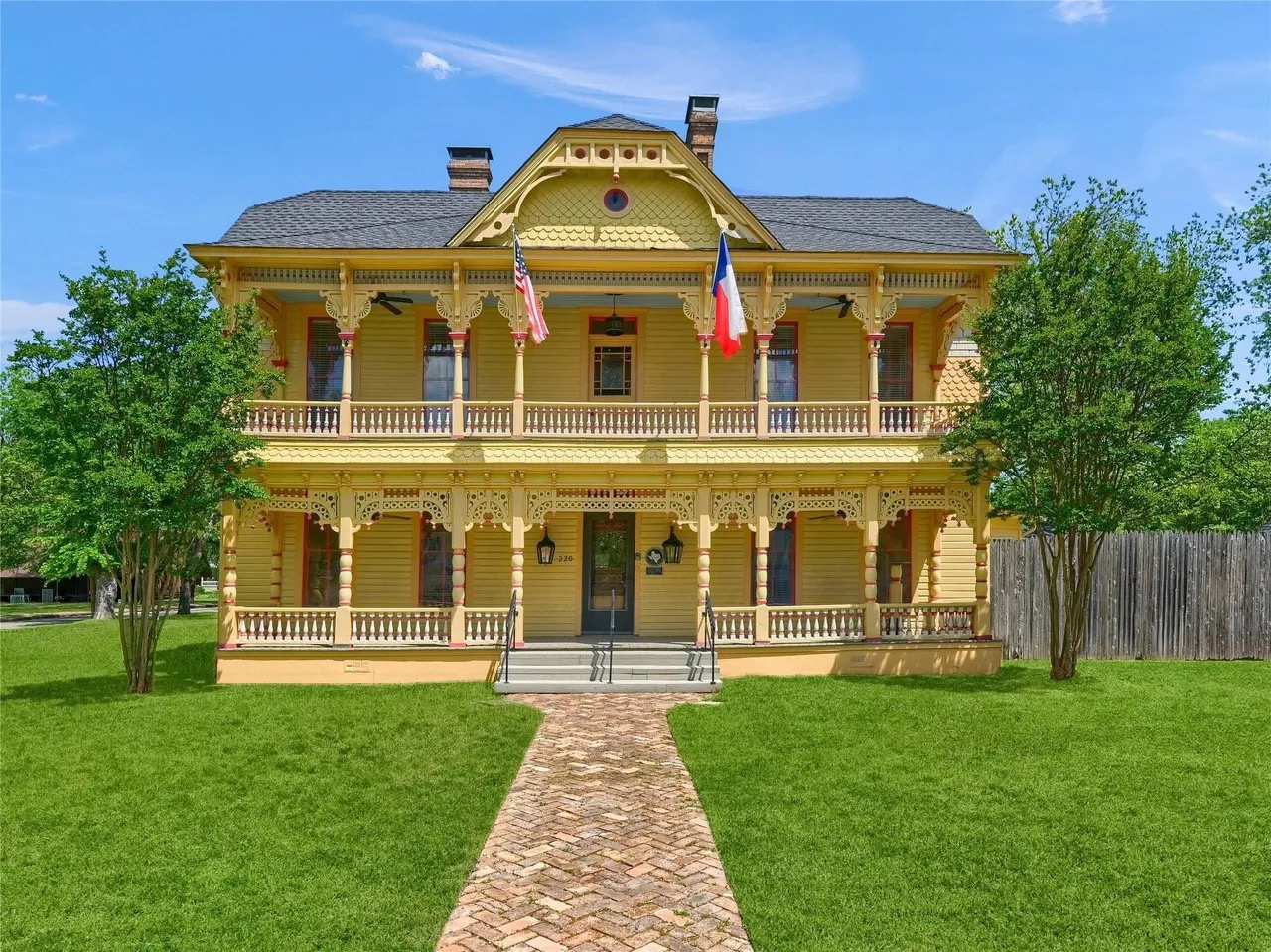
The W. W. Brownlee Home holds a special place in our team's experience. Shannon Miles Group had the privilege of representing the sale of this historic Bonham residence, giving us firsthand appreciation for the character and unique considerations involved in bringing a property of this significance to market.
The Sam Rayburn House: History and Rural Heritage in One Place
No Bonham story is complete without Sam Rayburn, the longest-serving speaker of the United States House of Representatives. His home at 890 West State Highway 56, just west of town, ties the county's political history directly to its rural heritage. In 1914 Rayburn purchased 121 acres of farmland two miles west of Bonham, and by 1916 his two-story clapboard home was complete. The surrounding land produced cotton, corn, and sorghum and provided pasture for cattle, and over the years the farm was home to various family members, as the Texas Historical Commission's Sam Rayburn House history page recounts. In 1934, according to the official state historical marker, architect W. B. Yarborough enlarged the house in the Colonial Revival style, per the Fannin County Historical Commission's Sam Rayburn House page. Today it is a National Historic Landmark, a Recorded Texas Historic Landmark, a State Antiquities Landmark, and a Texas State Historic Site, preserved with original furnishings and open to the public, as described on the Texas Historical Commission's Sam Rayburn House page and in the Handbook of Texas.
More Historic Architecture in Fannin County
Bonham is not the only community in Fannin County with documented historic homes. In nearby Ladonia, the Haden House at 603 West Bonham Street was built in 1894 by craftsmen Martin and Krause for merchant J. B. Haden and his wife Elizabeth. Its cypress construction, gingerbread trim, cupola, and stained glass make it one of the county's most distinctive Victorian homes, and it is listed on the National Register of Historic Places, as recorded on the Fannin County Historical Commission's Haden House page and in the THC Atlas.
Northeast Texas's Queen Anne houses share that same spirit of decorative Victorian craftsmanship, and our guide to the style explains what defines them and what buyers should investigate before owning one. If you are drawn to documented homes like these, our historic homes page explains how we represent heritage properties across the region.
Understanding the Designations
The homes above carry different levels of official recognition, and it is worth understanding the difference. A National Register listing, such as the Clendenen-Carleton House and the Haden House, is a federal recognition of historic significance; by itself it generally does not restrict what a private owner may do with the property, although other applicable protections or federally connected requirements may apply. A Recorded Texas Historic Landmark is a state-level designation for properties judged historically and architecturally significant, and Texas law requires owners to notify the Texas Historical Commission at least 60 days before making exterior alterations that would affect the landmark's character. A Texas historical marker, such as the ones on the Brownlee Home and the McClellan-Cunningham House, documents a property's story for the public but carries no preservation restrictions. The Sam Rayburn House holds the highest levels of designation because it is publicly owned and operated as a state historic site.
Practical Advice for Historic-Home Buyers and Owners
Buying a historic home in Bonham is rewarding, but it is different from buying new construction. A few things matter more than they might in a newer house: the condition of the foundation, roof, and mechanical systems; whether the property carries any local, state, or federal designation and what that means for changes; and how age affects insurance and maintenance. Our Answer Book covers the questions owners ask most, from whether you can renovate a historic home however you want to how inspections differ for older homes and whether historic homes cost more to insure. For owners researching a home's documented history before making changes, the Fannin County Historical Commission at One North Center Street in Bonham is a valuable first stop, and the Texas Historical Commission's Atlas is a searchable resource for National Register listings and markers across the county.
A Living Part of the Community
Bonham's historic homes are not museum pieces frozen in time. They are lived-in, worked-in, and in some cases open for guests, and they give the county seat a character that newer subdivisions cannot replicate. For anyone who values the Legacy side of Northeast Texas living, these homes are a tangible link to the families and businesses that built the community, one house at a time. To learn more about historic and heritage properties across our region, visit our Historic Homes resource page.
Shannon Miles Group
eXp Realty | Paris, TX
Shannon and Scott Miles are a husband-and-wife real estate team serving Northeast Texas. Shannon is a Certified Luxury Home Marketing Specialist (CLHMS), and both are New Construction, Land, and Ranch Specialists who bring deep local knowledge to every type of transaction, including historic properties across Fannin County and beyond.