
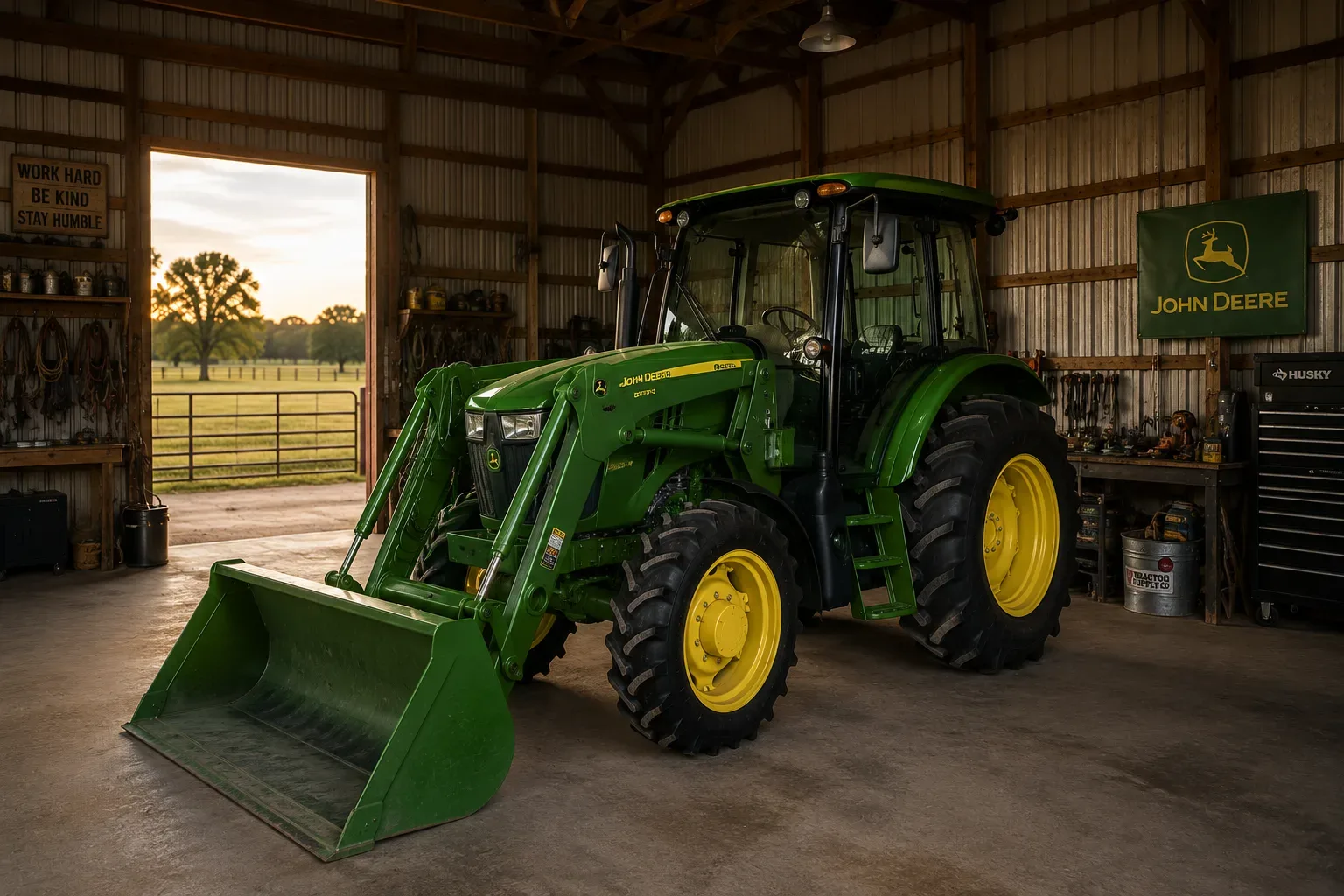
On premium acreage in Northeast Texas, the outbuildings often matter as much as the house. A sound shop, a well-built barn, and strong fences can save a buyer years of construction, while a neglected structure can quietly add repair costs to the purchase price. This guide walks through what to evaluate in barns, shops, working pens, equestrian facilities, and second dwellings before you make an offer.
Shannon and Scott Miles evaluate improvement complexes on ranches and acreage across Northeast Texas every week as founding members of the eXp Land and Ranch division. They see buyers pay for structures they never inspected and pass on properties whose best asset was hidden behind a closed door. Here is the checklist they use, from the barn door to the breaker panel.
Why Improvements Matter on Premium Acreage
Two tracts with similar soil and water can differ widely in price because one has a usable shop and the other does not. On larger acreage, buyers are often buying the improvements as much as the land: a barn that can hold hay, a shop with real electrical service, pens that work for cattle. The condition and layout of those structures shape what the property can do and what it will cost to make it right. Our guide to comparing ranch properties treats improvements as one of the core variables; this article goes deeper on the structures themselves.
What to Look for in a Barn
Start with the structure itself. Walk around the barn and look at the foundation, framing, roof, and siding. Check for leaning walls, sagging ridge lines, rusted roof panels, and rot where posts meet the ground. Note whether the barn is pole-built or conventionally framed, because that affects how easy it is to repair and how long it will last.
Then ask how the barn will actually be used. Hay storage needs dry, ventilated space with room for a loader to get in and out. A livestock barn needs stalls sized for the animals, floors that can be cleaned, and water nearby. A barn built for one purpose can often be adapted, but adaptation costs money. Also check whether power and water reach the barn, since running a new line or hydrant after closing is expensive. Our answer book entry on what to look for in a barn has the full structure-by-structure checklist.
What to Evaluate in a Shop or Workshop Building
Shops are often the deciding feature on Northeast Texas acreage, and they deserve a careful look. Measure the door widths and heights, and check the ceiling height under the trusses. A shop that fits a tractor, a truck, or a trailer with the door closed is a different asset from one that only stores implements.
Electrical service is the biggest variable. A shop with 200-amp service and plenty of outlets supports welding, fabrication, and heavy tools. A shop with a single 110-volt circuit limits what you can do. Note whether the service is single-phase or three-phase; three-phase is rare in rural residential areas and valuable to buyers who need it. Check the concrete for cracking and spalling, and confirm the slab is thick enough for the equipment you plan to park on it. Finally, look at access: can a trailer or equipment hauler get in and out, and is there turning room at the apron?
Racing families, in particular, weigh shop space heavily. Our guide to racing family properties with shop space covers what motorsports households look for, and our homes on acreage with shops page shows current examples of the feature in action.
Working Pens, Corrals, and Fencing
For buyers with cattle, the handling facilities matter more than almost any other improvement. Evaluate the alleyway, chute, and corral layout: does it flow naturally from pasture to pens, and are the materials sound? Walk the fence lines, not just the frontage. Check posts, wire, tension, gates, and corners, and look for repairs that were patched rather than done properly. Our answers on evaluating fencing and working pens and corrals walk through both in detail.
Equestrian Facilities
If the property includes an arena, stalls, a tack room, or a wash rack, evaluate them the same way you would any structure, with extra attention to the arena footing, stall ventilation, and safe fencing. Horse properties have their own checklist, from pasture quality to water access; our guide to equestrian properties in Northeast Texas and the answer book on buying horse property cover it end to end.
Guest Houses and Second Dwellings
On larger tracts, a guest house or second dwelling adds real flexibility: multigenerational living, a caretaker, weekend guests, or a place for grown children. Verify that the dwelling was permitted, that it has its own septic capacity, and that it is served by its own utilities. These are the same questions that drive legacy ranch decisions, and the answers determine whether the second building is an asset or a liability.
How Do Improvements Affect Property Value?
Improvements add value, but not dollar for dollar. A well-maintained shop in demand adds more than a run-down barn that needs a new roof. Condition, quality, and what buyers in the current market actually want all matter, and the same structure can be worth very different amounts on two different tracts. Our answer on how shops, barns, and improvements affect property value explains how to weigh them against the asking price.
What to Verify Before You Buy
Beyond the structures themselves, confirm what was permitted and when, check for unpaid taxes or liens, verify the agricultural valuation status, and review the septic and well records. Look at how the buildings sit relative to floodplain and drainage, and ask about shared access or easements that cross the improvements. When you are weighing two properties side by side, our framework for comparing ranch properties in Northeast Texas helps you balance improvements against water, layout, and access instead of fixating on one feature.
Walk the Property With Someone Who Knows Structures
The fastest way to learn what a ranch's improvements are really worth is to walk them with someone who has evaluated hundreds of them. Shannon and Scott Miles have helped buyers and sellers across Northeast Texas assess barns, shops, and outbuildings on everything from weekend acreage to premium ranch estates. Call the Shannon Miles Group at (903) 785-2005, email hello@shannonmiles.com, or stop by the office at 2322 Lamar Ave. in Paris, TX, and let us help you see past the paint to what the property can actually do. You can also start with our land and ranch services page to see how we guide buyers through the process.

Shannon Miles Group
eXp Realty | Paris, TX
Shannon and Scott Miles are a husband-and-wife real estate team serving Northeast Texas and Southeast Oklahoma. They are founding members of the eXp Land and Ranch division and hold the GRI designation, and Shannon is a Certified Luxury Home Marketing Specialist (CLHMS). Based at 2322 Lamar Ave. in Paris, TX, they help families evaluate and buy premium acreage, ranches, and homes with shops and outbuildings across the region. To learn more about what premium land is worth, see our guide to luxury ranch properties in Northeast Texas.