
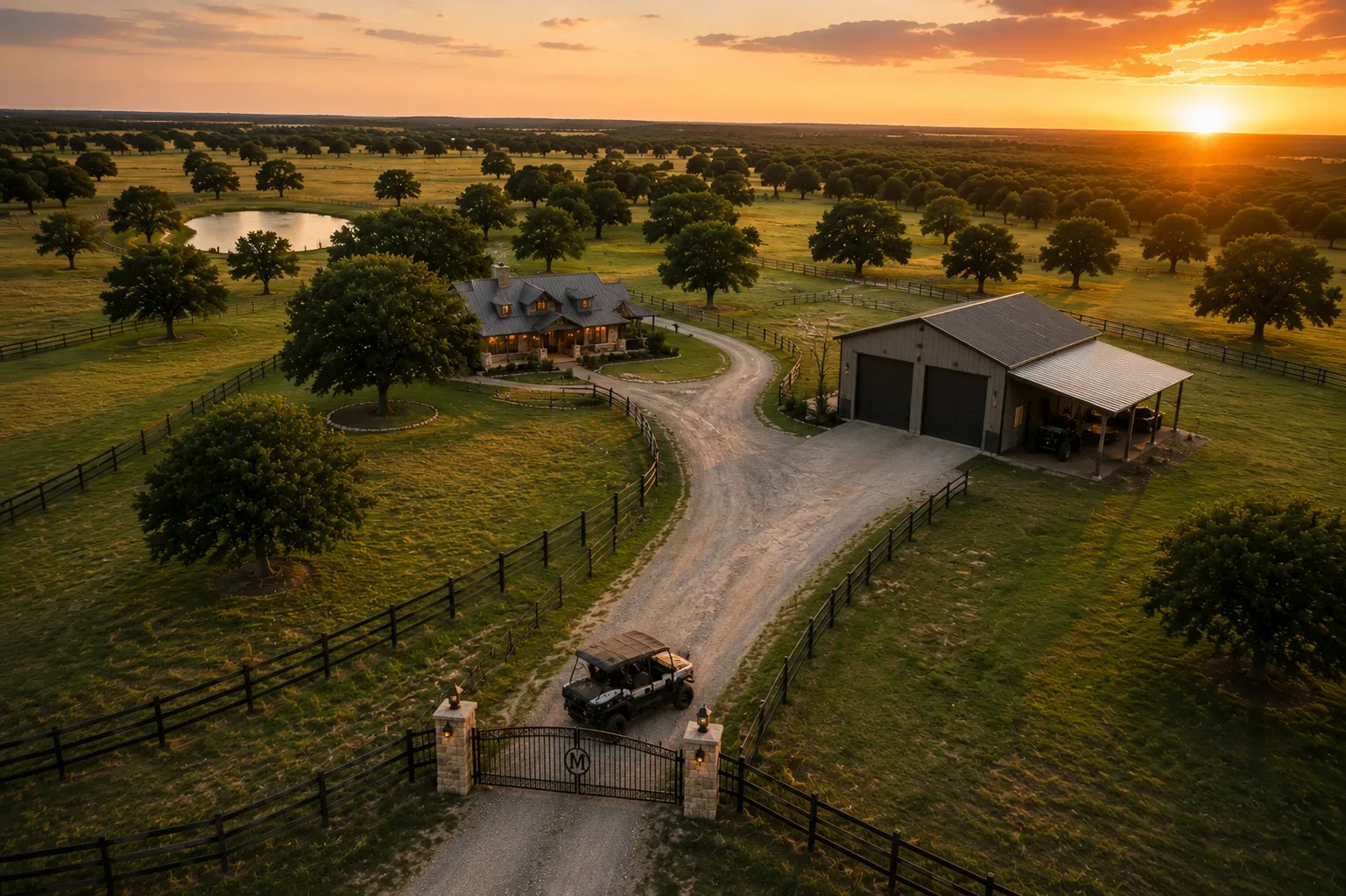
When you are comparing two ranch properties in Northeast Texas, the price per acre is only the starting point. The lower-priced tract can end up costing more once you add water development, fencing, and improvements, while the higher-priced property can be the better value when you count everything already in place. This guide gives you a practical framework for weighing premium acreage side by side.
Shannon and Scott Miles walk ranch properties with buyers across Northeast Texas every week, and the same question comes up each time: which property is really the better buy? The answer almost never comes from the price per acre. It comes from water, improvements, layout, access, and the costs that follow the purchase.
Why Price Per Acre Is Only the Starting Point
Price per acre is a useful shorthand, but it treats every acre as the same product. A 40-acre tract with a year-round creek, a stocked pond, and a gated entry is not the same property as a 40-acre tract with no water and a long private road to maintain. When you compare ranches, you are comparing what each property would cost to make work for your plans.
Water First: Ponds, Creeks, Wells, and Springs
Water is the first question on premium acreage in Northeast Texas and usually the biggest difference between two otherwise similar tracts. A property with a dependable pond, a flowing creek, or a strong well supports livestock, wildlife, and irrigation in a way dry land cannot. Walk every water source in person. Is the pond actually holding water, or is it a low spot that fills only after rain? Does the creek run year-round or just after storms? What does the well produce? Our Answer Book covers ponds and water sources on ranch property and creeks, springs, and seasonal water in detail; both are worth reading before you make an offer.
Improvements: Barns, Shops, Fencing, and Working Pens
Two ranches can have the same acreage and very different usefulness. Improvements are the difference. A property with a hay barn, a shop with concrete floors and real electrical service, cross fencing, and working pens saves you years of development time and real capital. When you compare, list every improvement and its condition. Fencing is a good example: good perimeter and cross fencing is expensive to replace, and our guide to evaluating fencing on a farm or ranch explains what to check. The same goes for barns and shops, where age, structure, and electrical capacity matter most.
Layout and Usability: How the Land Works Day to Day
A tract that looks great on a map can be awkward in practice, so compare how each property works for your daily routine. Where would the house go? Can you reach the pasture, the barn, and the main gate without crossing paths? Is there a natural spot for a shop, garden, or second home? The Answer Book entry on whether a ranch layout works for day-to-day livestock management is a strong checklist for anyone running cattle or horses.
Access, Privacy, and Neighboring Land Uses
Access is one of the least glamorous and most important comparisons. Legal access, road frontage, and road condition affect everything from your commute to your insurance. A gated entry on a quiet county road can be worth more than extra acreage to a buyer who values privacy. Also look at what surrounds each property: a neighboring operation, a future development, or a busy highway can change how a property feels and resells. Our guide to evaluating road access and frontage covers the questions to ask.
Soils, Pasture, and Wildlife
Soil quality shows up in everything: pasture production, septic feasibility, building foundations, and drainage. Two tracts a mile apart can have completely different soils, so county soil maps and a walk in the field matter more than reputation. If wildlife is part of your plan, compare habitat, cover, and water sources rather than just acreage. The Answer Book on soil in Northeast Texas and the guide to evaluating pasture quality walk through what to look for. For more on what makes premium acreage stand out, see our luxury ranch guide and our hunting land buying guide.
The Costs That Follow the Purchase
The purchase price is not the whole cost. Compare the carrying costs: property taxes, especially whether each tract holds an agricultural valuation; insurance; road maintenance; and bringing utilities to a building site. An ag-exempt tract can carry meaningfully lower taxes, and our guide to ag-exempt ranches in Northeast Texas explains how that works. Two properties at the same price can have very different annual costs.
A Simple Way to Compare Two Properties Side by Side
Here is the framework we use when buyers choose between two ranches. For each property, write down: water sources and their condition; improvements and their age; fencing condition; layout and building sites; access and road maintenance; neighboring land uses; soil and pasture quality; wildlife value; ag valuation and taxes; and what you would need to spend in the first two years. Price per acre is the last line, not the first. When two properties are close on paper, the one that needs less work and fits your plans better is usually the better buy.
When the Numbers Are Close, Local Knowledge Decides
Every ranch in Northeast Texas is different, and the differences rarely show up in a listing. Shannon and Scott Miles walk properties with buyers regularly and know which ponds hold water, which soils perk for septic, and which roads flood after a hard rain. As founding members of the eXp Land and Ranch division, they handle complex rural properties every week through their land and ranch practice.
If you are comparing two properties and want experienced eyes on both, call (903) 785-2005 or email hello@shannonmiles.com. You can also stop by the office at 2322 Lamar Ave. in Paris, TX. We are happy to walk the land with you and help you see the difference between two good-sounding properties.

Shannon Miles Group
eXp Realty | Paris, TX
Shannon and Scott Miles are a husband-and-wife real estate team serving Northeast Texas and Southeast Oklahoma. They are founding members of the eXp Land and Ranch division, GRI-designated agents, and Shannon is CLHMS certified. Based at 2322 Lamar Ave. in Paris, TX, they help buyers and sellers evaluate complex ranch, land, and acreage properties with local knowledge that does not show up in a listing.