
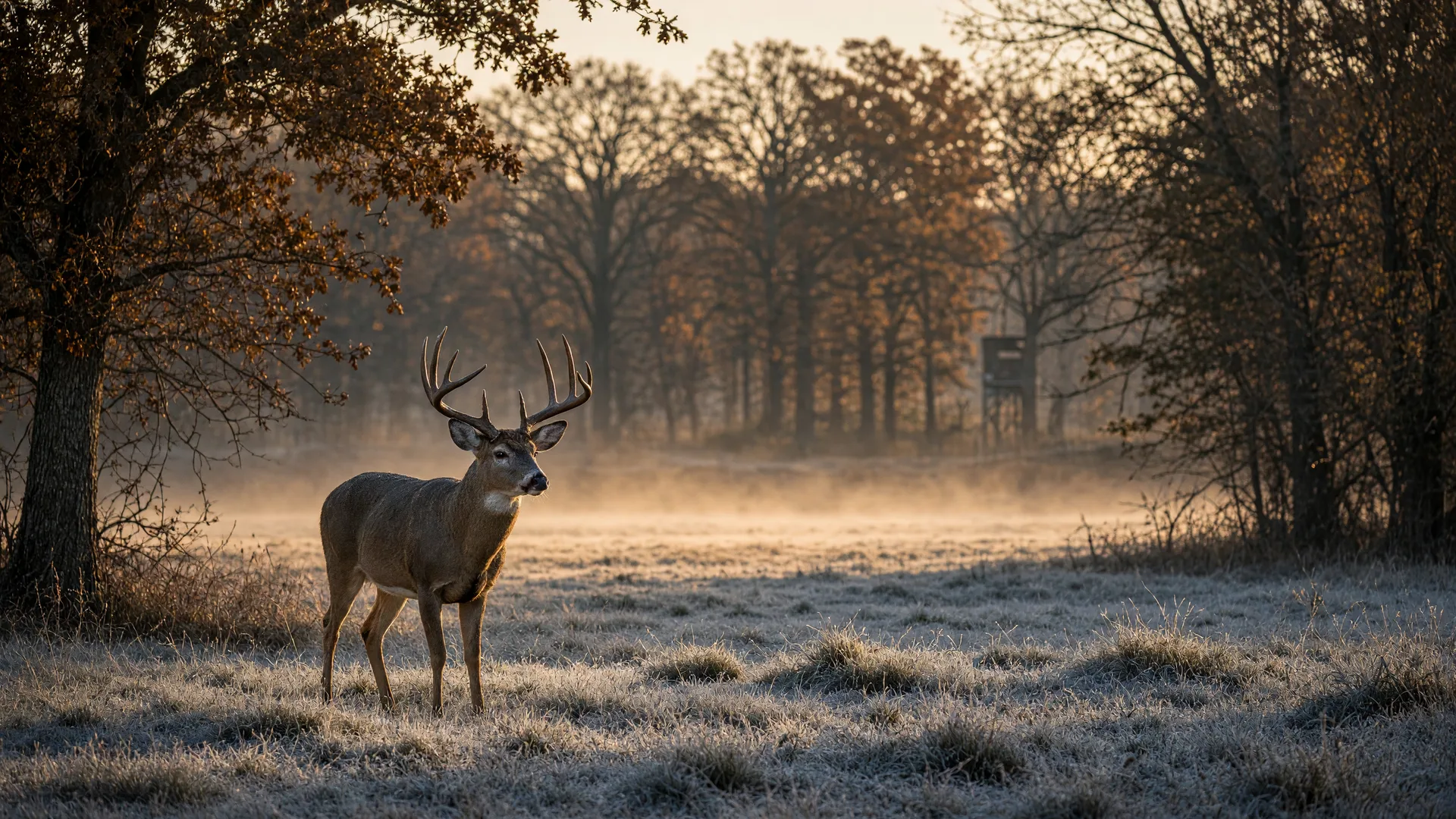
General rifle season for white-tailed deer in the North Zone, which includes Northeast Texas, runs from November 7, 2026 through January 3, 2027. Archery season opened October 3, and the season closes with muzzleloader and special late seasons from January 4 through 17, 2027. For anyone who owns rural land, or is shopping for it, deer season is more than a date on the calendar. It changes how you use the property, what you can learn about it, and what you should verify before you buy.
Deer season is woven into rural life across Lamar, Fannin, Grayson, Red River, Delta, Hopkins, and Hunt counties. Whether you already own acreage, are considering a hunting or recreational tract, or simply want to understand the rhythm of the region, here is what the 2026-2027 season looks like and what it means for land.
When Is Deer Season in Northeast Texas?
Texas Parks and Wildlife divides the state into North and South zones, and the counties of Northeast Texas fall in the North Zone. The 2026-2027 white-tailed deer seasons for the North Zone are:
- Archery-only: October 3 through November 6, 2026
- Youth-only, early: October 30 through November 1, 2026
- General season (rifle and other legal firearms): November 7, 2026 through January 3, 2027
- Muzzleloader-only: January 4 through 17, 2027, in the counties TPWD designates
- Special late season (antlerless and spike-buck only): January 4 through 17, 2027, in participating North Zone counties
- Youth-only, late: January 4 through 17, 2027
Not every county offers every season, and bag limits vary by county. The TPWD Outdoor Annual (tpwd.texas.gov) is the official source for the exact dates, bag limits, and legal methods where you hunt, and it is updated every season.
What Deer Season Means for Landowners
For landowners, deer season is when a recreational tract earns its keep. It is also a reminder that wildlife habitat is an asset you can manage. Texas offers open-space valuation for land managed under a TPWD-approved wildlife management plan, which can keep property taxes closer to agricultural rates. Wildlife management is not the same as an agricultural valuation, and the designation must be applied for and maintained. Our answer on wildlife management versus agricultural valuation explains the difference, and our guide to ag-exempt ranches in Northeast Texas covers how both work on real property.
Many rural landowners also lease hunting rights. A written lease should spell out who may hunt, which species, when, and who carries liability. Texas law gives landowners of agricultural land used for recreation meaningful protection: under the Texas Recreational Use Statute, they are generally not liable for injuries to hunters except for intentional acts or gross negligence. Even so, put the terms in writing, and talk to your neighbors about boundaries before the season starts. Our hunting properties page explains how hunting value works on Northeast Texas land.
What Deer Season Means for Land Buyers
If you are looking at hunting or recreational land, the season is your best classroom. From November through January you can walk a tract and read the deer sign: rubs and scrapes along field edges, trails between bedding cover and food, droppings near oaks and food plots. You can also see how the property sits relative to neighbors, which matters more on a hunting tract than almost any other feature. Our guide to buying hunting land in Northeast Texas covers what to look for on the ground.
Two practical notes. First, wear blaze orange whenever you walk rural land during hunting season, even a property you are simply considering. Hunting may be happening on adjacent tracts, and a bright vest is cheap insurance. Second, if the property carries an active hunting lease, read it before you make an offer. Does it convey with the sale? When does it end? What does it allow? An existing lease can be steady income, or it can be a surprise at closing. Our answer on buying farm or ranch land with an existing lease explains what to review.
Do You Need a License to Hunt Your Own Land?
Buying land does not exempt you from a hunting license. Wildlife in Texas belongs to the people of the state, and a license is required for most hunting even on property you own. The narrow exceptions cover feral hogs and coyotes causing damage on your own land. Hunters born on or after September 2, 1971 must also complete a TPWD hunter education course, or buy a deferral and hunt under the supervision of a licensed adult. Our answer on hunting licenses for landowners walks through the rules, and TPWD publishes the current hunter education requirements.
Safety and Good Neighbor Etiquette on Rural Land
Deer season is busiest on weekends, and rural roads and property lines get more traffic. A few habits keep everyone safe: wear blaze orange on any walk through the country, know your property lines and stay inside them, never shoot across a road or fence line, and let neighbors know when hunters will be on your place. In small communities, the way you hunt is part of the way you are known.
Find Land That Fits How You Hunt and Live
Shannon and Scott Miles are founding members of the eXp Land and Ranch division and work with hunting and recreational land buyers across Northeast Texas every week. They can help you evaluate a tract's habitat, access, and lease situation before you commit. Call the Shannon Miles Group at (903) 785-2005, email hello@shannonmiles.com, or stop by the office at 2322 Lamar Ave. in Paris, TX. Our hunting properties page is a good place to start, and we would love to help you find a place that fits how you actually hunt and live.

Shannon Miles Group
eXp Realty | Paris, TX
Shannon and Scott Miles are a husband-and-wife real estate team serving Northeast Texas and Southeast Oklahoma. They are founding members of the eXp Land and Ranch division and hold the GRI designation, and Shannon is a Certified Luxury Home Marketing Specialist (CLHMS). Based at 2322 Lamar Ave. in Paris, TX, they help families find hunting, recreational, and working ranch properties across eight Northeast Texas counties. To learn more about selling rural land, see our selling land and acreage guide.