
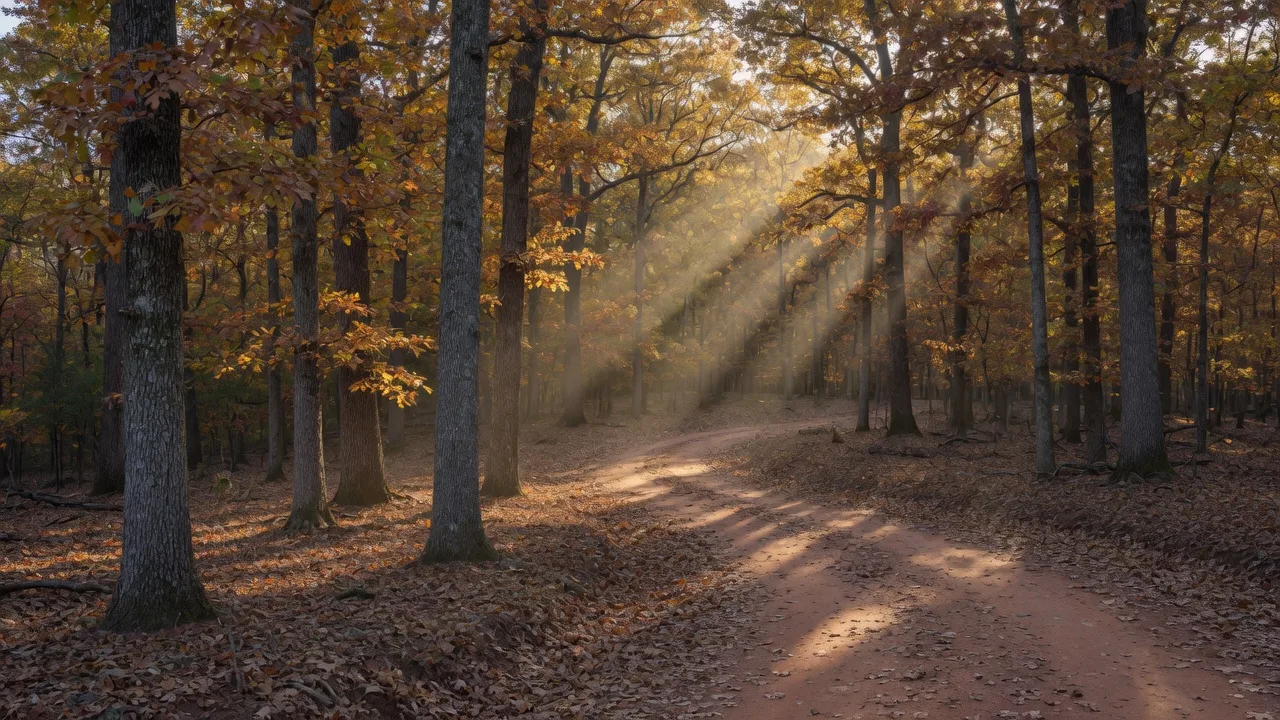
Timber value in Northeast Texas is not a single number. It depends on species, tree size, merchantable volume, accessibility, and what timber markets will pay on any given day. Most wooded acreage in Lamar, Red River, Delta, and surrounding counties still sells primarily for its homesite, recreation, hunting, and agricultural value, with standing timber adding a separate and usually smaller layer. A timber cruise by a consulting forester is the only reliable way to know what yours is worth.
That starting point matters because almost every wooded tract we show gets described by its seller as "good timber." Sometimes that is accurate. Often it just means the place has trees. The difference can be thousands of dollars per acre of perceived value, and it shows up in every pricing conversation we have on rural property between Paris, Clarksville, Bonham, and Sulphur Springs.
Shannon and Scott Miles are founding members of the eXp Land and Ranch Division and work with ranch, acreage, hunting, and rural property across Northeast Texas from their office at 2322 Lamar Ave. in Paris, TX. The land and ranch service page explains how they evaluate these properties, and this post walks through how timber actually factors into the value of wooded land in this part of Texas.
Why "Good Timber" Is Not a Price
We hear the phrase on nearly every wooded tract we list. What it usually means is that the owner enjoys the trees, or assumes a logger would pay for them, or simply cannot imagine anyone not seeing value in a beautiful stand of oaks. None of those is a market signal.
A merchantable stand is different from a wooded lot. Loggers and timber buyers pay for volume of species they can sell: sawtimber-size trees of marketable species, in stands large enough and accessible enough to cut at a profit. A wall of small-diameter post oak, blackjack, and cedar on a hillside may be lovely cover for deer and shade for a homesite, but no mill is paying stumpage for it. The Answer Book entry on cedar and brush problems explains how an overgrown stand can actually read as a liability rather than an asset.
The flip side is just as common: we have seen wooded tracts sell for more to a hunting or recreation buyer than the standing timber would ever have brought at the sawmill. The trees are the amenity. The buyer is paying for privacy, wildlife habitat, shade, and a place to build in the woods, not for board feet. When we evaluate a tract, we ask what the trees do for the property's best use before we ask what a logger would pay.
The Forests Around Paris and the River Bottoms
Northeast Texas sits at the western edge of the East Texas Piney Woods, and the variety of timber here matters to the value conversation. On the uplands of Lamar, Red River, and Delta Counties, shortleaf pine grows mixed with post oak, blackjack oak, and southern red oak, and the Post Oak Belt of wooded savanna begins right around this part of the region, according to Texas Parks and Wildlife's habitat history and the Texas Almanac's forest maps.
Down in the Red River floodplain, the forest changes to bottomland hardwoods: overcup oak, water hickory, sycamore, cottonwood, and black willow along the river margins, with baldcypress in backwater sloughs. The Sulphur River rises in Delta County and crosses the Post Oak Savannah on its way east, and its bottoms carry mature stands of oak, sweetgum, hickory, ash, and elm. Those species differences are not trivia. Pine sawtimber trades in one market, mixed hardwoods in another, and quality oak veneer or bottomland hardwood is a different conversation entirely.
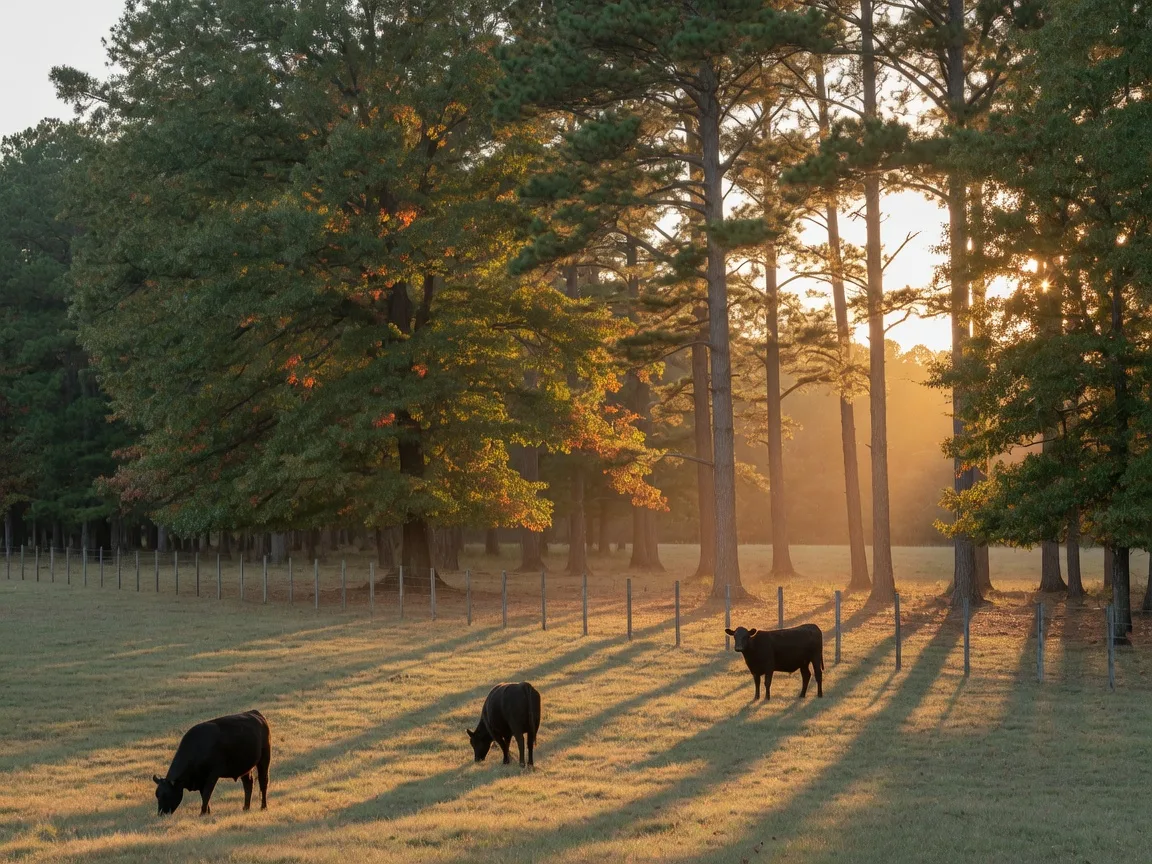
The acreage guide describes the region's timber and recreational ground, including Sulphur River basin and Red River bottomland tracts, and the hunting land guide covers how wooded cover contributes to a tract's recreation value. Their per-acre ranch land guide then shows where timber fits in the region's rural land market data.
What Actually Determines Timber Value
When a tract does have marketable timber, six things decide what a buyer, seller, or forester should think it is worth:
- Species and grade. Pine sawtimber, oak sawtimber, and mixed hardwood pulp stand in completely different markets. Quality matters as much as species: straight, sound, high-grade trees carry premium prices, while low-grade or damaged timber trades at a fraction.
- Size and volume. Timber is measured, not estimated by eye. A cruise by a trained forester tallies species, diameters, and merchantable volume stand by stand, and volume is what converts into dollars.
- Operability. Can a loaded log truck get in and out? Gate widths, canopy height, creek crossings, wet bottoms, and county road frontage all decide whether a stand is worth cutting at all. The road access and frontage answer is the same checklist we run for a logging operation.
- Markets and haul distance. Stumpage rates move with regional demand and sawmill capacity. Distance to a marketable buyer and the current price cycle are part of the math.
- Stand history. A tract that was high-graded or clear-cut twenty years ago holds a young, low-volume stand today. Storm damage, drought, and cedar encroachment also change what is actually merchantable.
- Scale. A 10-acre stand of mixed hardwoods almost never justifies a harvest. A 100-plus-acre pine stand can be a real income asset. The acreage changes the whole conversation about whether timber is a feature or a business.
The practical rule we give landowners is simple: if the tract has real volume of marketable species, pay a consulting forester for a cruise before you put a number on the trees. Texas A&M Forest Service maintains landowner resources and can help you connect with a consulting forester in the region. The fee is a small fraction of the pricing mistake it prevents, on either side of the table.
The Property Tax Angle Most Landowners Miss
Timber has its own place in Texas property tax law, and it surprises more buyers than almost anything else on a wooded tract. Two rules work together.
First, producing timber counts as agricultural use for Texas open-space (1-d-1) valuation. A tract actively devoted to timber or forest products production, with the intent to produce income, can qualify for productivity valuation the same way grazing land does, as long as the land has been devoted to qualifying agricultural use or timber production for five of the previous seven years. Second, qualifying timberland is appraised under its own rules in Texas Tax Code Chapter 23, Subchapter E, using income capitalization of average net income to the land, with the appraised value capped at market value. The Texas Comptroller publishes the guidance and annual capitalization rates, and the Texas A&M Forest Service publishes the Manual for the Appraisal of Timberland that appraisal districts use.
What that means on the ground is that qualifying wooded acreage can carry a much lower annual tax bill than its market value would suggest, and that tax position is often part of what a buyer is really purchasing. The flip side is where people get hurt:
The clearing mistake we see most often. A landowner decides to "neaten up" the place and clears fifteen or twenty acres of post oak and brush without checking the ag valuation first. Later they learn the clearing changed the land's use and triggered rollback taxes, and the clearing rarely added a dollar to the sale price. If you are considering clearing any meaningful acreage, have that conversation with the appraisal district and your tax advisor before the dozer arrives.
The ag-exempt ranch guide explains how agricultural valuation works on ranch property across the region, and the Answer Book entry on qualifying for ag valuation covers the five-of-seven-years rule and how a change in use triggers rollback. Every wooded-tract purchase should include a look at the appraisal district record, not just the deed.
What Sellers Should Do Before Listing Wooded Land
If you are about to list a wooded property, here is the sequence we recommend:
- Leave the trees alone until you have a market read. The urge to "clear brush" before listing is nearly always a mistake on wooded acreage. Buyers who want this kind of property want the trees, and a cleared hillside shrinks your buyer pool instead of widening it.
- Get a cruise, or at least a forester's look, when the tract has real volume. Document species, volume, and what a current market would pay. A one-page cruise summary turns "good timber" from a talking point into a documented asset, or it quietly retires the claim, which saves everyone time.
- Check who owns the timber rights. If a prior owner reserved them or granted a cutting agreement, disclose it clearly and be ready to explain it. Our timber rights answer covers how severance works in Texas and what to verify in the chain of title.
- Pull your ag valuation record. Know whether the tract qualifies, what category it falls under, and its history at the appraisal district. That record is part of the property's story and part of the price.
- Price against wooded-acreage comparable sales, not timber math. The selling land and acreage guide explains how unique properties are priced, and the Seller Center is the place to start for any property type.
What Buyers Should Verify on a Wooded Tract
For buyers, the checklist is shorter but just as important:
- Whether timber rights convey with the surface. Timber rights can be severed from the land in Texas, and a reservation in the chain of title means the trees are not necessarily yours to harvest.
- Whether a harvest ran recently. Fresh stumps, a logging deck, and rutted haul roads tell you a cutting cycle just happened and the merchantable volume may be gone for decades.
- Flood history in the bottoms. Beautiful bottomland timber and a flood-prone building site can sit on the same ground. The floodplains answer explains what to verify before you fall for the scenery.
- Ag valuation status and history. Whether the tract qualifies now, and whether it still will after your plans, is a carrying-cost question that belongs in your offer math.
- Access for anything bigger than a truck. If you ever plan to harvest, gate widths, canopy, creek crossings, and county road frontage decide whether it is possible. The access and frontage answer is the framework we use.
- How the seller priced the timber into the asking price. Ask what the cruise said, or whether there ever was one. If "timber value" is being used as a price justification without a cruise behind it, treat it as a claim to verify, not a fact.
The buyers who handle wooded land best treat the trees as a feature to preserve, not a check to cash. The same canopy that gives you shade, hunting, and privacy usually does more for resale than one harvest ever would. The vacant land valuation answer explains why comparable sales, not features alone, set the price, and the ranch comparison framework lays out how to weigh a tract's features before you choose.
When Timber Belongs in the Pricing Conversation
The table below is the shorthand we use when a seller asks whether timber is part of the value story. It depends entirely on the tract and the buyer pool:
| Tract scenario | What usually drives the price | The practical move |
|---|---|---|
| 5 to 20 acres of mixed hardwoods around a homesite | Privacy, shade, recreation, and the setting of the home itself | Compare wooded-acreage sales; skip the cruise; put the trees front and center in the marketing |
| 40 acres or more with merchantable pine or oak sawtimber | Volume, species, operability, and current stumpage markets | Get a cruise; document the stand; make the timber story a documented part of the listing |
| Bottomland hardwoods along the Red or Sulphur River | Hunting, wildlife, and recreation; flood risk is a real constraint | Verify flood history, access, and ag valuation; price to the hunter and the lifestyle buyer |
| Pine plantation or timberland with a harvest history | Income potential, existing cutting agreements, and markets | Confirm timber deeds and cutting agreements before closing; check exactly what conveys |
Questions Landowners and Buyers Ask Us About Timber
Are the trees on my land worth money?
Sometimes. If the stand has merchantable volume of marketable species with access and a market, yes, and a cruise will tell you how much. If the tract is small, or the trees are small-diameter hardwood and cedar, the commercial value is usually minimal even though the trees add real appeal to the property. The trees can be worth plenty as an amenity even when they are worth nothing as timber.
Should I pay for a timber cruise before selling wooded land?
If the tract runs 40 acres or more and has real volume, yes. A consulting forester measures what is actually there, and that document either supports the price or keeps you from leaning on a claim that will not survive a buyer's due diligence. For a small tract of mixed hardwoods, a cruise usually is not worth the time; wooded-acreage comparable sales tell the pricing story better.
If I cut timber, do I lose my ag valuation?
It depends on what the cutting does to the land's qualifying use. Routine timber management on land that stays in timber production is a normal part of the use. A wholesale conversion, clearing timber to put the ground to another use, changes the picture and can trigger rollback taxes. Have the conversation with the appraisal district before you cut at scale.
What if someone else owns the timber rights to my land?
Then the trees are not fully yours to harvest. Timber rights can be reserved, sold, or leased separately from the surface estate, and a reservation in the chain of title controls what you can do. Review the title work and any prior timber deeds or cutting agreements before you plan around the timber. The timber rights answer covers the details, and mineral ownership is a separate question handled in the mineral rights guide.
Are bottomland trees worth more than upland trees?
Not automatically. Quality floodplain hardwoods can carry strong values in the right market, but flood-prone bottoms are harder to operate, riskier to build on, and often sell to a hunting and recreation buyer rather than a timber buyer. Buyers frequently pay more for what the bottomland does for wildlife and privacy than for what the sawlogs will bring.
Sources and Last Updated
Geographic scope: Northeast Texas, with emphasis on Lamar, Red River, Delta, and surrounding counties and the Red River and Sulphur River bottomlands. Subject: timber value, wooded land pricing, and the property tax treatment of timberland. Sources:
- Texas Comptroller of Public Accounts, Agricultural, Timberland and Wildlife Management Special Appraisal: comptroller.texas.gov/taxes/property-tax/ag-timber/index.php
- Texas Property Tax Code, Chapter 23 (including Subchapter E, Appraisal of Timber Land): statutes.capitol.texas.gov/Docs/TX/htm/TX.23.htm
- Texas A&M Forest Service, Manual for the Appraisal of Timberland (March 2022 edition): tfsweb.tamu.edu
- Texas Parks and Wildlife, Pineywoods Historical Perspective: tpwd.texas.gov/landwater/land/habitats/pineywood/
- Texas Parks and Wildlife, Red River Large Floodplain Forest: tpwd.texas.gov
- Texas Almanac, Forest Resources and Tree Regions: texasalmanac.com/articles/forest-resources
Last updated: October 23, 2026. Timber markets and appraisal rules change; the information here reflects the sources available on that date. For a tract-specific read, ask for the local closed sales and, where volume exists, a current cruise rather than relying on a regional rule of thumb.
We also post rural property walk-throughs and buying guidance on our YouTube channel, including how we read trees, water, and access on an acreage tract before an offer. Seeing a wooded property walked is different from reading about one.
Bring us the wooded tract before you commit.
Wooded land is worth understanding before a contract, not after. If you are considering a tract with timber, send it to us and we will walk it with you: the tree value, the access, the flood history, and the tax picture in one conversation. If you own it and are thinking of selling, bring us your acreage before you spend money on clearing or a cruise that may not change the price. Either way, the conversation starts with the property's own facts.

Shannon Miles Group
eXp Realty | Paris, TX
Shannon and Scott Miles are a husband-and-wife real estate team serving Northeast Texas. They are founding members of the eXp Land and Ranch division, hold the GRI designation, and Shannon is a Certified Luxury Home Marketing Specialist (CLHMS). Based at 2322 Lamar Ave. in Paris, TX, they help buyers and sellers of ranch, acreage, hunting, and rural property across the region.