
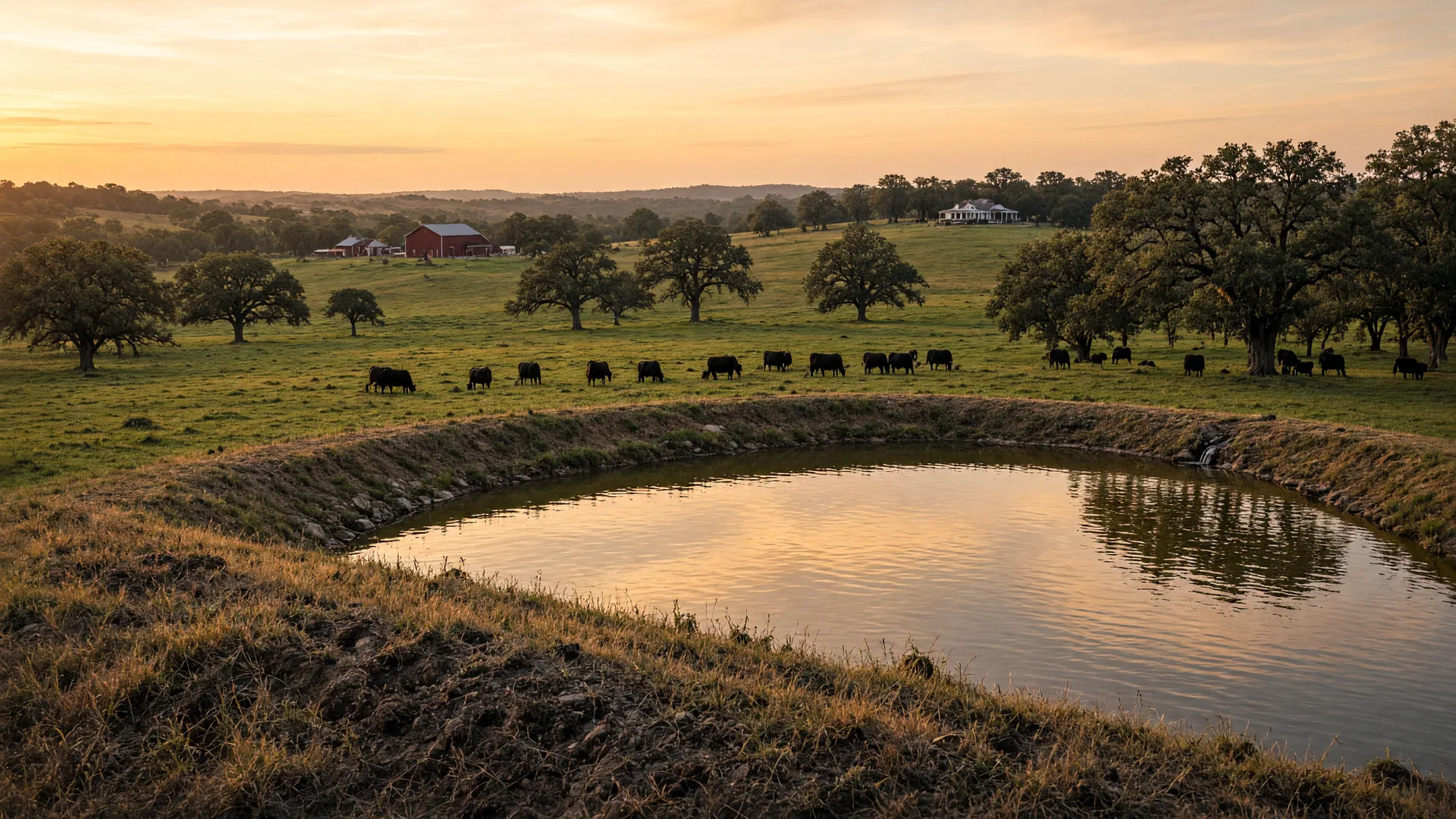
Water is one of the first things ranch buyers in Northeast Texas ask about, and it is often the biggest difference between two otherwise similar tracts. A dependable pond or stock tank carries cattle through a dry summer, a flowing creek draws wildlife and adds recreation, and a strong well makes daily life possible far from a city line. This guide explains what water is worth on premium acreage and how to evaluate it before you make an offer.
Shannon and Scott Miles evaluate water on ranch showings every week as founding members of the eXp Land and Ranch division. Buyers who understand water buy better ranches, and sellers who present their water honestly sell faster. Here is the framework we use, from the dam face to the well casing.
Why Water Is a Core Part of Ranch Value
On a working ranch, water is infrastructure. Livestock need a reliable source within reach of every pasture, wildlife need habitat cover near water, and recreation from fishing to swimming depends on it. A tract with dependable water is usable in a way dry land is not, and that shows up in how it is priced and how easily it sells. It also supports agricultural valuation, which can affect your property taxes from the first year you own it. Our Answer Book entry on ponds and water sources on ranch property covers the questions behind that value in detail.
How Do I Know if a Pond or Stock Tank Will Hold Water?
Do not trust a full pond in a listing photo. A tank that looks great in a wet spring can go dry in July. Ask the seller how the water held up in past droughts, especially 2011, and walk the dam in person.
Look for cattle trails across the top of the dam, low spots, bare or eroding grass on the dam face, and signs of settling or seepage. A pond's reliability depends on the size of the watershed draining into it and the clay content of the soil. Sandy or loamy soils leak no matter how well the basin is shaped, so county soil maps matter as much as the dam itself. A deep pond with a maintained berm and a working spillway stays cooler, holds water longer, and grows less moss than a shallow one. The Answer Book guide to buying land with a pond walks through dam condition, water source, and liability question by question.
Creeks, Springs, and Seasonal Water
A creek or spring can be the strongest asset on a property, or the most misleading. Verify whether the creek runs year-round or only after storms. Intermittent water is still useful for wildlife and livestock, but it cannot be counted on the way a perennial source can. Check the flood history of the land around the creek and whether any part of the tract sits in a mapped floodplain, which affects where you can build. Our guides to creeks, springs, and seasonal water, floodplains before buying land, and drainage problems on acreage each explain what to verify.
Wells and the Daily Water Supply
A well is far more consistent than a rain-fed tank, and it is often the deciding factor for a family planning to live on the land. Ask about the well's tested yield in gallons per minute, its depth, its age, and its water quality, and request the well record if one exists. A low-yield well can limit everything from irrigation to a growing household. Our guide to water well permits on rural land in Lamar County explains what Texas and Oklahoma require, and the Answer Book covers water needs for a homestead.
Who Owns the Water on Your Land?
Texas water law splits into three buckets. Surface water in creeks and rivers belongs to the state and is held for all Texans, so using it beyond narrow exemptions requires a permit. Diffused surface water, the rainfall and runoff before it enters a defined watercourse, belongs to the landowner. Groundwater beneath your land is yours under the rule of capture, subject to regulation by any groundwater conservation district that applies to your tract. Our Answer Book on owning the water under your land explains all three, and our blog on pond and stock tank permits covers the 200 acre-foot rule and the state permit exemption for farm tanks.
How Water Affects the Price
Water adds value, but not dollar for dollar, and it rarely shows up as a separate line on an appraisal. A dependable pond with a maintained dam adds more than a leaking tank, and a year-round creek in the right spot can matter more than the house. That is why our framework for comparing ranch properties puts water first, and our guide to luxury ranch properties shows how water sets premium tracts apart.
What to Verify Before You Buy
Before you make an offer, check the permit status of any existing pond or dam, review the floodplain map, confirm the well record and water quality, and ask how the water performed through the most recent drought. A winter visit is one of the best tests: low water reveals ponds that cannot hold their level, springs that run dry, and drainage problems that hide under summer grass. Our guide to winter land shopping explains why the off-season is a window into real water. For the structures around the water, our guide to barns, shops, and outbuildings on Northeast Texas ranches is a good companion read.
Walk the Water With Someone Who Knows It
The fastest way to understand what a ranch's water is really worth is to walk it with someone who has evaluated hundreds of water features across Northeast Texas. Shannon and Scott Miles look at the dam, the watershed, the well, and the creek on every land showing, and they can help you tell a dependable source from a pretty picture. Call the Shannon Miles Group at (903) 785-2005, email hello@shannonmiles.com, or stop by the office at 2322 Lamar Ave. in Paris, TX. You can also start with our land and ranch services page to see how we guide buyers through premium acreage from the first visit to closing.
This guide draws on primary and institutional sources. Texas water law is set by the state and administered by state agencies, and it changes over time, so always confirm the current rules for your exact tract with the serving agency before you buy or build.

Shannon Miles Group
eXp Realty | Paris, TX
Shannon and Scott Miles are a husband-and-wife real estate team serving Northeast Texas and Southeast Oklahoma. As founding members of the eXp Land and Ranch Division, they evaluate water, improvements, and layout on ranch properties across the region every week, and they hold the GRI designation. Shannon is also a Certified Luxury Home Marketing Specialist (CLHMS). To learn more about what separates premium acreage, see our guide to luxury ranch properties in Northeast Texas.